




The Recipe Chaos Secret: Why 90% of Dietitians Are Losing Money 😱
Is your recipe 'system' actually a chaotic mountain of PDFs and sticky notes? 📝 Stop wasting hours on manual work and start scaling your profit with the only AI built for real pros. 🚀

If you've recently been told your blood sugar is higher than normal, you might be feeling overwhelmed, scared, or unsure about what comes next. Those feelings are completely valid. Hearing the word "prediabetes" can bring up a lot of questions, and you may wonder if this means Type 2 diabetes is inevitable.
Here's the encouraging truth: prediabetes can often be reversed through lifestyle changes, particularly nutrition. You have more control than you might think, and the steps you take now can make a meaningful difference in your health journey.
This article will walk you through what prediabetes means, the science behind reversal, and practical dietary strategies you can start using today.
Prediabetes is a condition where your blood sugar levels are higher than normal but not yet high enough to be classified as Type 2 diabetes. Think of it as a warning sign from your body -- an opportunity to make changes before more serious health issues develop.
When you eat, your body breaks down carbohydrates into glucose (sugar), which enters your bloodstream. Your pancreas produces insulin to help move that glucose into your cells for energy. In prediabetes, your cells start becoming resistant to insulin's effects, or your pancreas isn't producing enough insulin to keep up. This means glucose stays in your bloodstream longer than it should.
Your doctor may use several tests to diagnose prediabetes. Here are the ranges that matter:
Hemoglobin A1C:
Fasting Blood Glucose:
If your numbers fall in the prediabetes range, it's a signal to take action. But it's also important to know that these numbers can improve with the right changes.
This is one of the most common questions people ask, and the answer is encouraging. Yes, prediabetes can often be reversed through lifestyle modifications.
The landmark Diabetes Prevention Program (DPP) study showed that people with prediabetes who made lifestyle changes -- including modest weight loss and increased physical activity -- reduced their risk of developing Type 2 diabetes by 58% over three years. For adults over 60, the risk reduction was even higher at 71%.
What's particularly notable is that lifestyle changes were more effective than medication in preventing diabetes progression. This research gives real hope: your daily choices around food and movement have meaningful power.
Reversing prediabetes doesn't require perfection. It's about making consistent, sustainable changes that add up over time.
There's no single "prediabetes diet" that works for everyone. However, certain principles consistently support healthy blood sugar levels. Let's explore what matters most.
Carbohydrates have the biggest impact on blood sugar, but you don't need to eliminate them entirely. The key is balancing carbs with other nutrients to slow digestion and prevent sharp spikes.
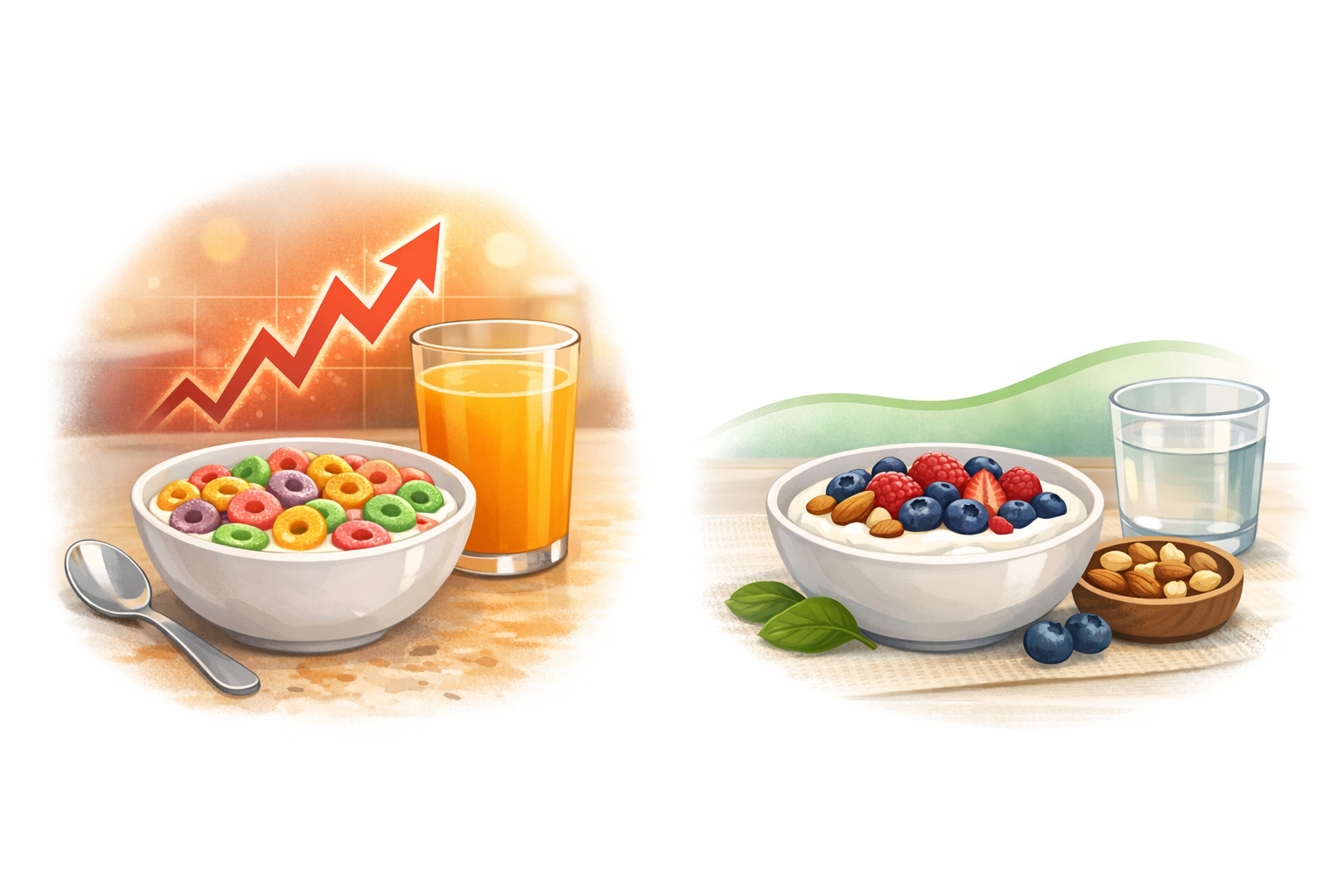
When you eat carbohydrates alone -- say, a piece of fruit or a slice of toast -- your blood sugar can rise quickly. But when you pair that same carbohydrate with protein, fiber, or healthy fat, the sugar enters your bloodstream more gradually.
Practical examples:
The glycemic index (GI) ranks foods based on how quickly they raise blood sugar. Foods with a high GI (like white bread, white rice, and sugary snacks) cause rapid spikes, while low-GI foods (like legumes, most vegetables, and whole grains) cause gentler rises.
However, GI doesn't tell the whole story. Glycemic load considers both the quality of the carbohydrate and the amount you're eating. This gives you a more practical picture of how a serving of food affects your blood sugar.
Lower glycemic load choices include:

Portion awareness matters, but it doesn't mean you need to measure everything or feel deprived. Simple visual strategies can help:
When you eat can be almost as important as what you eat. Eating at regular intervals helps keep blood sugar stable throughout the day.
Consider these timing strategies:
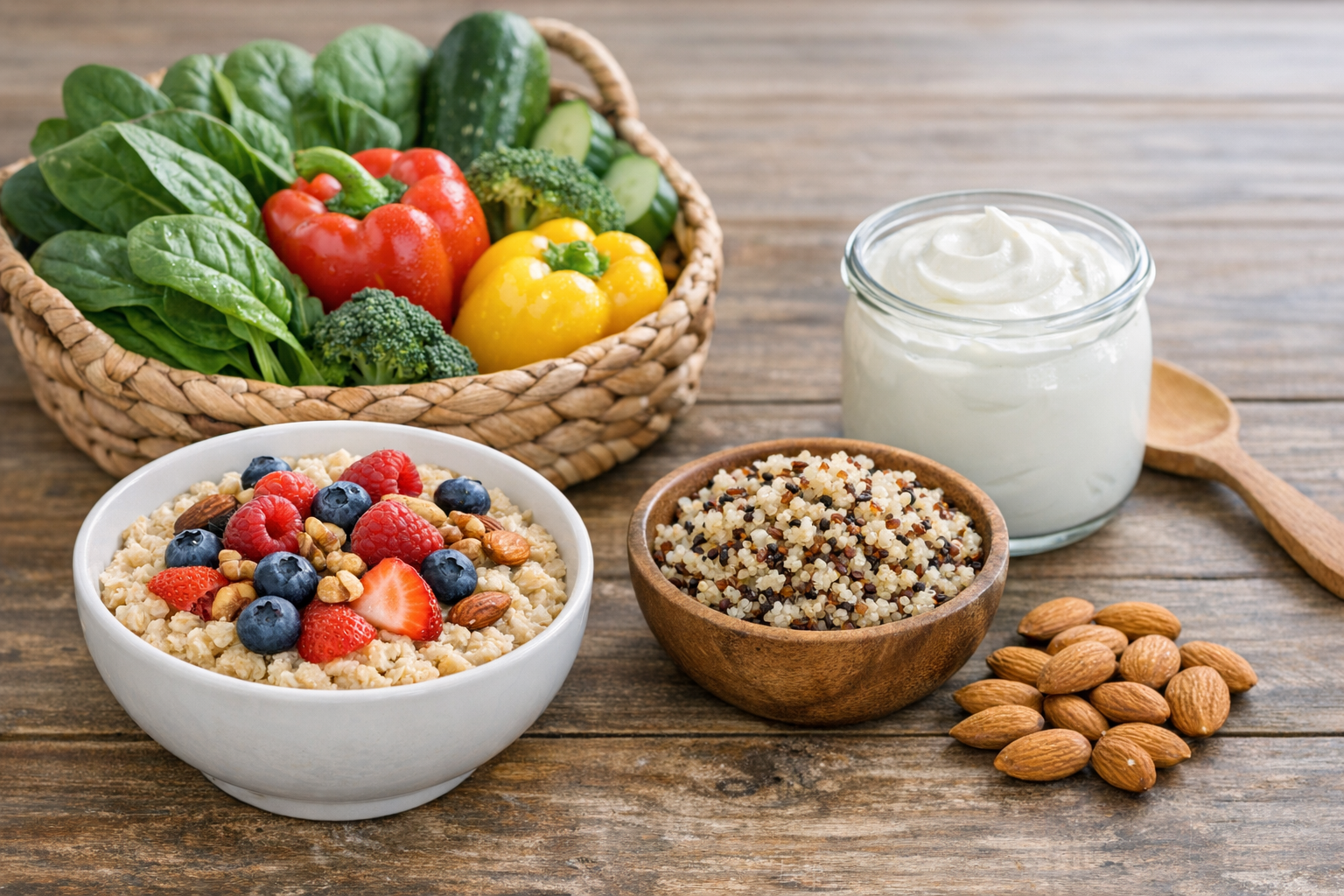
Let's focus on what to add to your plate. Building meals around these foods supports healthy blood sugar and overall wellbeing.

These should form the foundation of most meals. They're packed with fiber, vitamins, and minerals while having minimal impact on blood sugar.
Aim for at least 2-3 cups of non-starchy vegetables per day.
Whole grains contain fiber and nutrients that refined grains lack. They digest more slowly, leading to gentler blood sugar responses.
Keep portions to about 1/2 to 1 cup cooked per meal.
Protein helps you feel full and satisfied while having minimal direct effect on blood sugar.
Beans and lentils are nutritional powerhouses for blood sugar management. They're rich in fiber and plant-based protein.
Studies show that regularly eating legumes can help lower A1C levels.
These provide healthy fats, protein, and fiber. They make excellent snacks or additions to meals.
Stick to about 1 ounce (a small handful) per serving.
Fat slows digestion and helps you absorb certain vitamins. Focus on these sources:
Rather than thinking in terms of "forbidden" foods, consider which foods to enjoy less often or in smaller amounts. This approach feels more sustainable and less restrictive.
This is one of the most important changes you can make. Sweetened drinks cause rapid blood sugar spikes and provide little nutritional value.
Better choices: Water, unsweetened tea, black coffee, or sparkling water with a splash of lemon or lime.
Foods made with white flour and added sugars tend to spike blood sugar quickly.
You don't have to eliminate these entirely, but consider them occasional treats rather than daily staples.

Highly processed meats like hot dogs, bacon, and some deli meats are associated with increased diabetes risk. They also tend to be high in sodium, which can affect blood pressure.
These can increase inflammation and insulin resistance. Limit:
If your current diet includes many of these foods, making sudden drastic changes can feel overwhelming. Instead, try a gradual approach:
Small, consistent changes often lead to lasting results.
Here are two days of simple, realistic meals to give you a starting point. Adjust portions based on your individual needs and preferences.
Breakfast: Greek yogurt parfait
Lunch: Mediterranean-style salad
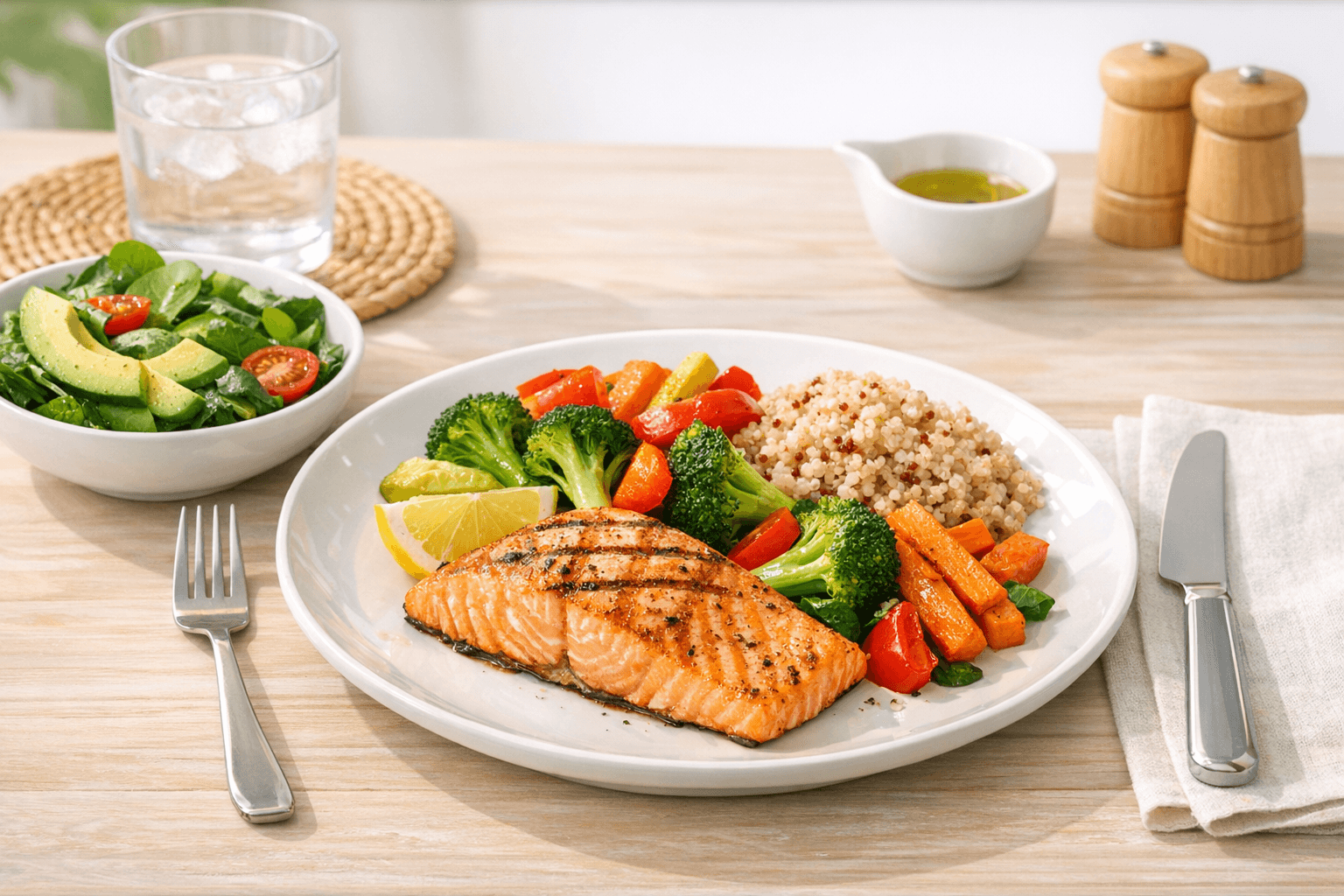
Dinner: Baked salmon with vegetables
Snack (optional): Apple slices with 1 tablespoon almond butter
Breakfast: Veggie scramble
Lunch: Lentil soup
Dinner: Chicken stir-fry
Snack (optional): 1/4 cup nuts and a small pear
While nutrition is a cornerstone of managing prediabetes, physical activity is a powerful partner. You don't need to become an athlete or spend hours at the gym.
When you move your body, your muscles use glucose for energy, which helps lower blood sugar levels. Activity also improves insulin sensitivity, meaning your cells become better at using the insulin your body produces.
Benefits of even light activity:
Aim for about 150 minutes of moderate activity per week -- that could be a 30-minute walk five days a week. Start where you are and gradually increase. Every bit of movement counts.
Managing prediabetes is not something you have to figure out alone. Regular testing helps you track your progress, and working with healthcare professionals provides personalized guidance.
Important members of your team:
A registered dietitian can help you understand how different foods affect your blood sugar, navigate social situations, dining out, and emotional eating, and create realistic goals that fit your life. They can also help you interpret your lab results and adjust your approach as needed.
Nutrista connects you with qualified, registered dietitians who can create personalized meal plans tailored to your specific needs. Unlike generic calorie-tracking apps that only offer automated advice, Nutrista provides access to real dietitians who understand the complexities of blood sugar management and can support you with evidence-based, compassionate guidance.
Receiving a prediabetes diagnosis can feel frightening, but it's also an opportunity. You now have information that empowers you to take action. Research consistently shows that lifestyle changes -- particularly nutrition and movement -- can reverse prediabetes and prevent or delay Type 2 diabetes.
Start with small, manageable changes. Add more vegetables to your meals. Choose whole grains over refined ones. Take a short walk after dinner. Drink water instead of sugary beverages. Each positive choice builds on the last.
You don't have to be perfect. You just have to keep moving forward.
If you're looking for personalized support, consider connecting with a registered dietitian through Nutrista. Their platform combines the expertise of real, vetted dietitians with modern technology, giving you access to personalized meal planning and ongoing support. With the right guidance and consistent effort, reversing prediabetes is absolutely possible.
This article provides general educational information and is not a substitute for personalized medical advice. Please consult with your healthcare provider or a registered dietitian for recommendations specific to your health needs.

Is your recipe 'system' actually a chaotic mountain of PDFs and sticky notes? 📝 Stop wasting hours on manual work and start scaling your profit with the only AI built for real pros. 🚀

Think your protein shake is helping? 🛑 You're likely drinking overpriced chalk and lies. Discover why your tracker is gaslighting you and how Nutrista AI is fixing the supplement industry. 🥤✨

Stop lying to yourself. Your New Year resolution is already on life support. 😱 Discover why your tracking apps are failing you and how Nutrista AI is the only way to save your 2026 goals! 🔥
Professional nutritionists ready to help you