




prediabetes

Prediabetes Diet: How to Reverse Prediabetes Naturally Through Nutrition

Nutrista Team
Share
Prediabetes Diet: How to Reverse Prediabetes Naturally Through Nutrition

Prediabetes Diet: How to Reverse Prediabetes Naturally Through Nutrition

Receiving a prediabetes diagnosis can feel overwhelming. Maybe your doctor mentioned your blood sugar was "a little high" or showed you an A1C number that did not quite make sense. You might be wondering what this means for your future and whether there is anything you can do about it.

Here is the encouraging truth: prediabetes is not a life sentence. It is a warning sign, yes, but also an opportunity. Research consistently shows that with the right nutrition and lifestyle changes, you can lower your blood sugar levels and significantly reduce your risk of developing type 2 diabetes. This article will walk you through exactly how to do that, one practical step at a time.


Real Dietitians, Real Results

Download on the App StoreGet it on Google Play

What Is Prediabetes? A1C Levels Explained

Prediabetes means your blood sugar levels are higher than normal, but not yet high enough to be classified as type 2 diabetes. It signals that your body is starting to struggle with managing glucose effectively, often due to insulin resistance.

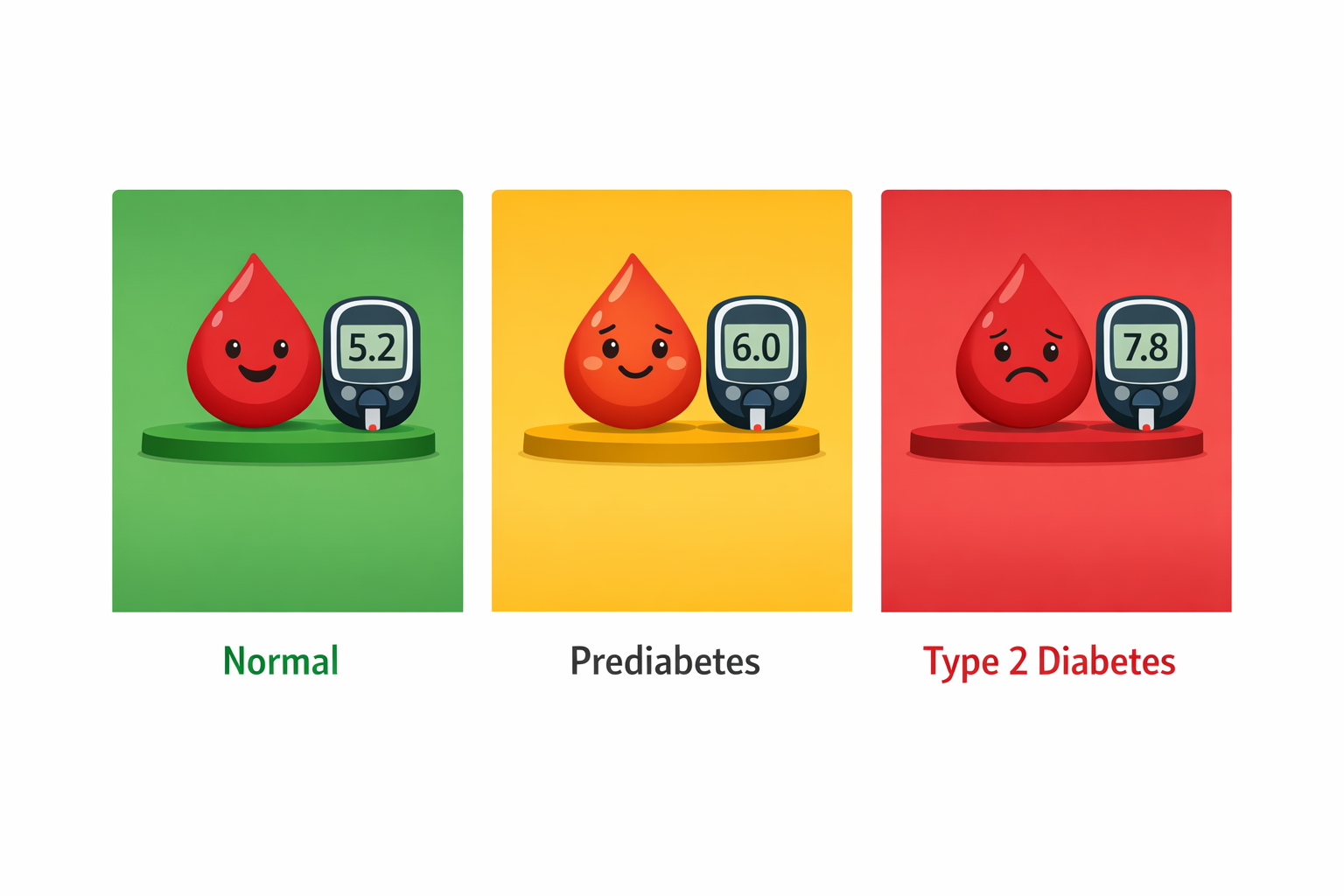
The most common way to diagnose prediabetes is through the A1C test, which measures your average blood sugar over the past two to three months. Here is what the numbers mean:

A clear infographic showing the diabetes spectrum with three columns: normal blood sugar (A1C below 5.7%) in green, prediabetes (A1C 5.7-6.4%) in yellow/amber, and type 2 diabetes (A1C 6.5% and above) in red. Clean, educational design with clear labels.

Real Dietitians, Real Results

Download on the App StoreGet it on Google Play
  • Normal: A1C below 5.7%
  • Prediabetes: A1C between 5.7% and 6.4%
  • Type 2 diabetes: A1C 6.5% and above

If your A1C falls in the prediabetes range, you are not alone. More than 1 in 3 adults in the United States has prediabetes, and many do not even know it. The good news is that this window of time is your chance to act.


Why Prediabetes Is a Critical Window for Intervention

Prediabetes is sometimes called a "silver lining" diagnosis because it gives you a chance to change course before type 2 diabetes develops. Lifestyle changes can reduce the risk of progressing to type 2 diabetes by up to 58%, according to landmark research from the Diabetes Prevention Program.

Real Dietitians, Real Results

Download on the App StoreGet it on Google Play

Your body is remarkably resilient. When you give it the right tools through nutrition, movement, and sleep, insulin sensitivity can improve. Blood sugar can stabilize. You can move your A1C back into the normal range.

The key is taking action now, rather than waiting.


Real Dietitians, Real Results

Download on the App StoreGet it on Google Play

Foods That Help Lower Blood Sugar and Improve Insulin Sensitivity

One of the most powerful tools for reversing prediabetes is your grocery cart. What you eat directly affects your blood sugar and how efficiently your body uses insulin. Focus on incorporating these blood-sugar-friendly foods:

Fiber-rich vegetables

  • Leafy greens like spinach, kale, and Swiss chard
  • Broccoli, cauliflower, Brussels sprouts, and cabbage
  • Bell peppers, zucchini, and green beans
  • Artichokes and asparagus

Whole grains

  • Steel-cut or rolled oats
  • Quinoa, barley, and farro
  • Brown rice and wild rice
  • Whole wheat bread (look for "whole grain" as the first ingredient)

Legumes

  • Lentils (green, brown, red, or black)
  • Chickpeas and black beans
  • Kidney beans and cannellini beans

Lean proteins

  • Chicken breast and turkey
  • Fish like salmon, mackerel, and sardines
  • Eggs and Greek yogurt
  • Tofu and tempeh

Healthy fats

  • Extra virgin olive oil
  • Avocados
  • Nuts like almonds, walnuts, and pistachios
  • Seeds including chia, flax, and pumpkin seeds

Fiber is especially important because it slows the absorption of sugar into your bloodstream. This helps prevent spikes after meals and keeps you feeling fuller longer.


Real Dietitians, Real Results

Download on the App StoreGet it on Google Play

Foods to Avoid with Prediabetes

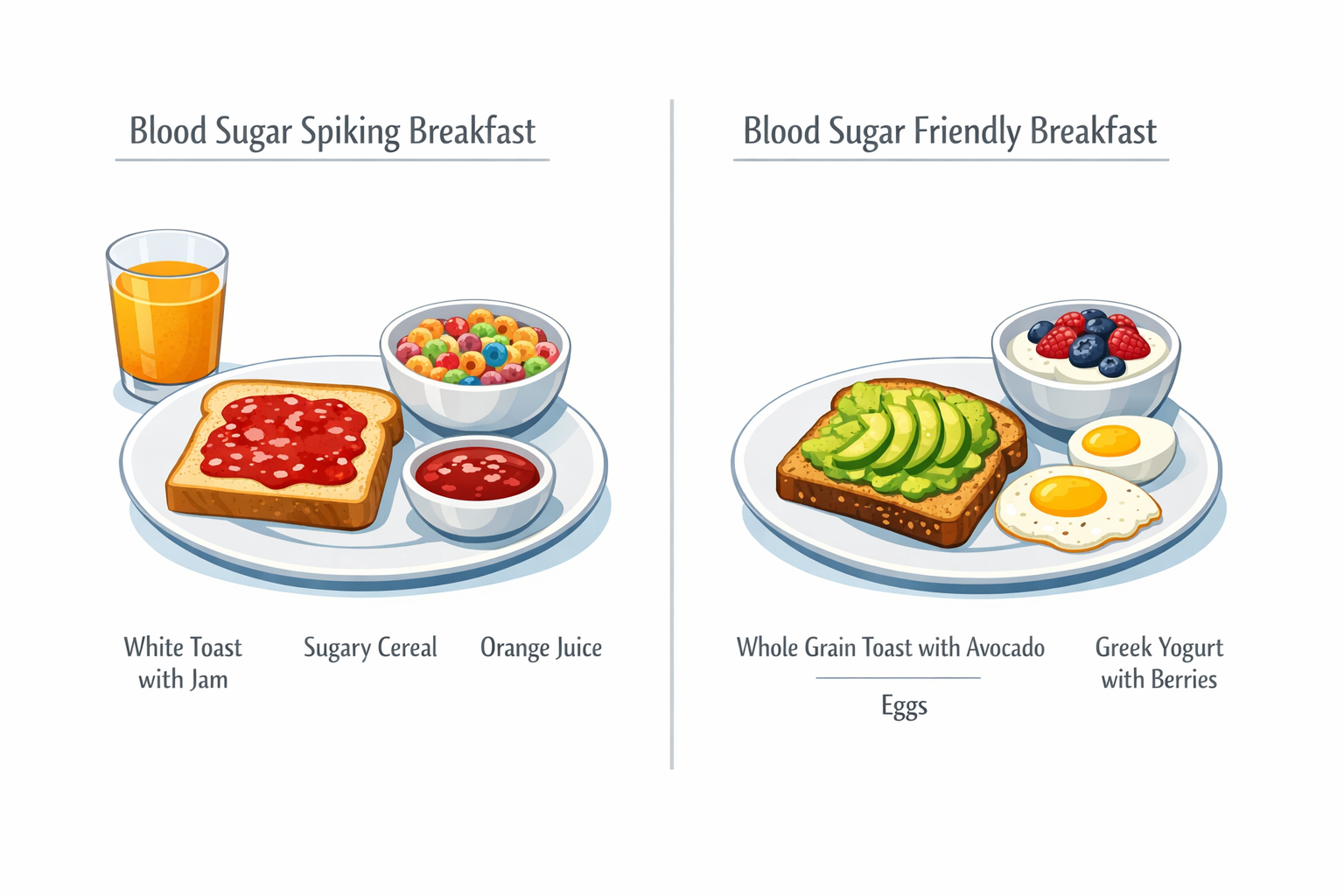
While no food needs to be completely banned, some foods can cause sharp blood sugar spikes and should be limited. Think of these as "sometimes" foods rather than everyday choices:

  • Refined carbohydrates: White bread, white pasta, white rice, crackers, and pastries
  • Sugary beverages: Regular soda, sweetened iced tea, fruit juices, and energy drinks
  • Processed snacks: Chips, cookies, candy, and packaged baked goods
  • Sweetened breakfast items: Sugary cereals, flavored instant oatmeal, pastries, and pancakes with syrup
  • Fried foods: French fries, fried chicken, and breaded, deep-fried items

An illustrated comparison of two breakfast plates side by side: on the left, a breakfast that causes blood sugar spikes (white toast with jam, orange juice, sugary cereal); on the right, a blood-sugar-friendly breakfast (whole grain toast with avocado, Greek yogurt with berries, eggs). Clean, simple illustration style with labels.


Real Dietitians, Real Results

Download on the App StoreGet it on Google Play

Understanding the Glycemic Index

The glycemic index (GI) ranks foods based on how quickly they raise blood sugar. Foods with a high GI cause rapid spikes, while low-GI foods lead to a slower, steadier rise.

You do not need to obsess over numbers. Instead, follow these simple principles:

  • Choose whole, minimally processed foods over refined ones
  • Fiber-rich foods are generally lower on the glycemic index
  • Adding protein, fat, or acid to a meal lowers its overall glycemic impact
  • Ripe fruits tend to have a higher GI than less ripe ones

For example, a baked potato has a high GI, but adding Greek yogurt or beans brings it down. White rice has a high GI, but pairing it with vegetables and chicken creates a more balanced meal.

Real Dietitians, Real Results

Download on the App StoreGet it on Google Play

The goal is not perfection. It is about making smarter swaps most of the time.


Meal Timing Strategies for Stable Blood Sugar

When you eat matters almost as much as what you eat. Here is how to use timing to your advantage:

Real Dietitians, Real Results

Download on the App StoreGet it on Google Play

Eat at regular intervals Going too long without eating can lead to blood sugar dips and overeating later. Aim for meals every 4-5 hours, with small snacks if needed.

Do not skip breakfast Research suggests that skipping breakfast may be linked to higher blood sugar levels later in the day. A balanced morning meal helps jumpstart your metabolism.

Pair carbohydrates with protein and fat Eating carbs alone can cause quick blood sugar spikes. Pairing them with protein and fat slows digestion and leads to a gentler rise. For example:

Real Dietitians, Real Results

Download on the App StoreGet it on Google Play
  • Apple slices with almond butter
  • Whole grain toast with avocado and an egg
  • Greek yogurt with berries and nuts

Avoid large, late dinners Your body processes sugar less efficiently at night. Try to have your largest meal earlier in the day when possible.


Prediabetes Meal Ideas for Breakfast, Lunch, and Dinner

Building balanced meals does not have to be complicated. Here are practical ideas you can start using today:

Real Dietitians, Real Results

Download on the App StoreGet it on Google Play

Breakfast options

  • Greek yogurt topped with berries, chopped walnuts, and a sprinkle of cinnamon
  • Two eggs with sauteed spinach and a slice of whole grain toast
  • Steel-cut oats made with milk or a milk alternative, topped with ground flaxseed and sliced almonds
  • Veggie scramble with mushrooms, bell peppers, and a small amount of cheese

Lunch options

  • Salad with mixed greens, grilled chicken, chickpeas, cucumber, and olive oil vinaigrette
  • Lentil soup with a side of mixed vegetables
  • Turkey and avocado wrap on a whole wheat tortilla with lettuce and tomato
  • Quinoa bowl with roasted vegetables and a drizzle of tahini

Dinner options

  • Baked salmon with roasted Brussels sprouts and a small portion of brown rice
  • Stir-fry with tofu, broccoli, bell peppers, and a light sauce over cauliflower rice
  • Grilled chicken thighs with roasted sweet potato and sauteed kale
  • Zucchini noodles with turkey meatballs and marinara sauce

Portion Control Strategies That Do Not Feel Restrictive

You do not need to count every calorie or weigh your food to manage portions. Try these gentle, sustainable approaches:

The plate method This simple visual guide works for most meals:

  • Fill half your plate with non-starchy vegetables
  • Fill one-quarter with lean protein
  • Fill one-quarter with whole grains or starchy vegetables

Mindful eating practices

  • Eat slowly and put your fork down between bites
  • Check in with your hunger and fullness cues
  • Minimize distractions like TV or scrolling while eating
  • Stop when you feel about 80% full

Use smaller plates and bowls This visual trick can help you feel satisfied with smaller portions without feeling deprived.

Real Dietitians, Real Results

Download on the App StoreGet it on Google Play

How Weight Loss Supports Prediabetes Reversal

If you are carrying extra weight, even a modest reduction can make a meaningful difference. Losing just 5-7% of your body weight can significantly improve insulin sensitivity and lower your risk of developing type 2 diabetes.

For someone who weighs 180 pounds, that means losing 9-13 pounds. You do not need to reach a "goal weight" to see benefits. Small, sustainable changes add up.

Real Dietitians, Real Results

Download on the App StoreGet it on Google Play

Focus on progress, not perfection. Slow, steady weight loss through balanced nutrition tends to be more sustainable than drastic diets.


Beyond Diet: Other Lifestyle Factors That Affect Blood Sugar

Nutrition is a cornerstone of prediabetes management, but other lifestyle factors matter too.

Real Dietitians, Real Results

Download on the App StoreGet it on Google Play

Physical activity

  • Muscle helps your body use insulin more efficiently. Aim for at least 150 minutes of moderate activity per week, such as brisk walking, swimming, or cycling.
  • Even a 10-minute walk after meals can help lower post-meal blood sugar.
  • Resistance training twice a week is especially beneficial for insulin sensitivity.

Sleep

  • Poor sleep can disrupt hormones that regulate blood sugar and appetite.
  • Aim for 7-9 hours of quality sleep per night.
  • Create a calming bedtime routine and limit screen time before bed.

Stress management

  • Chronic stress raises cortisol, which can increase blood sugar.
  • Find stress-reduction techniques that work for you: deep breathing, meditation, gentle yoga, or spending time in nature.

When to Work With a Dietitian for Prediabetes

General guidance is helpful, but personalized support can make all the difference. A registered dietitian can help you:

  • Create a customized prediabetes diet plan based on your preferences and lifestyle
  • Interpret your A1C results and set realistic goals
  • Navigate challenges like dining out, travel, or emotional eating
  • Adjust your plan as your needs change over time

Working with a qualified professional takes the guesswork out of managing your blood sugar. You do not have to figure this out alone.

Real Dietitians, Real Results

Download on the App StoreGet it on Google Play

Taking Your Next Steps

Prediabetes is not a diagnosis to fear. It is a signal that your body is asking for support, and you have the power to respond. Every small choice matters, choosing water instead of soda, adding vegetables to your lunch, taking a short walk after dinner. These seemingly small steps add up to meaningful change.

If you are looking for personalized guidance, Nutrista connects people with real, registered dietitians who can create tailored nutrition plans for blood sugar management. Unlike generic calorie-tracking apps that only offer AI-generated advice, Nutrista empowers real, local, registered dietitians with artificial intelligence so they can provide the most modern, effective support. It is the first platform that connects users with a large community of international, registered, vetted dietitians supported by AI technology.

Real Dietitians, Real Results

Download on the App StoreGet it on Google Play

You have more control than you might think. Start where you are, make one change at a time, and trust that your efforts matter. Always consult with your healthcare provider before making significant dietary changes, and consider reaching out to a registered dietitian for personalized support.

Your health journey is worth it, and you do not have to walk it alone.

Real Dietitians, Real Results

Download on the App StoreGet it on Google Play
#prediabetes#blood sugar#insulin resistance

Others Viewed