



menopause

Menopause and Nutrition: What to Eat for Symptom Relief

Nutrista Team
Share
Menopause and Nutrition: What to Eat for Symptom Relief

Menopause and Nutrition: What to Eat for Symptom Relief

If you're reading this, you may be experiencing the frustrating symptoms that accompany perimenopause and menopause. The hot flashes that strike at the most inconvenient moments, night sweats that disrupt your sleep, mood swings that catch you off guard, and the stubborn weight that seems to appear overnight. You're not imagining things, and you're certainly not alone.

Menopause is a natural life transition that every woman experiences, yet the journey can feel overwhelming when symptoms interfere with your daily life. While hormone therapy and medications are valid options for many women, nutrition offers a powerful, accessible way to support your body through this change. Understanding what to eat during menopause can make a meaningful difference in how you feel each day.

This article will guide you through the science-backed connections between diet and menopause symptoms, offering practical strategies you can start implementing today.

Real Dietitians, Real Results

Download on the App StoreGet it on Google Play

How Diet Affects Menopause Symptoms

During perimenopause and menopause, your ovaries gradually produce less estrogen and progesterone. These hormonal shifts affect nearly every system in your body, from your metabolism to your bones to your mood-regulating neurotransmitters. The foods you eat can either amplify or help calm these effects.

Nutrition plays a supportive role in managing common symptoms by:

  • Stabilizing blood sugar, which can reduce mood swings and hot flashes
  • Providing nutrients that support bone density as estrogen declines
  • Supplying compounds that may mimic mild estrogen effects in the body
  • Reducing inflammation that can worsen joint pain and fatigue
  • Supporting heart health as cardiovascular risk increases post-menopause

A woman's silhouette in a peaceful, relaxed pose surrounded by gentle imagery representing menopause wellness: flowers, leaves, and abstract shapes suggesting balance and wellbeing. Calming lavender and soft coral color palette.

Real Dietitians, Real Results

Download on the App StoreGet it on Google Play

Essential Nutrients for Menopause Symptom Relief

Calcium and Vitamin D for Bone Health

As estrogen levels decline, bone loss accelerates. Women can lose up to 20% of their bone density in the five to seven years after menopause. Getting adequate calcium and vitamin D becomes crucial during this time.

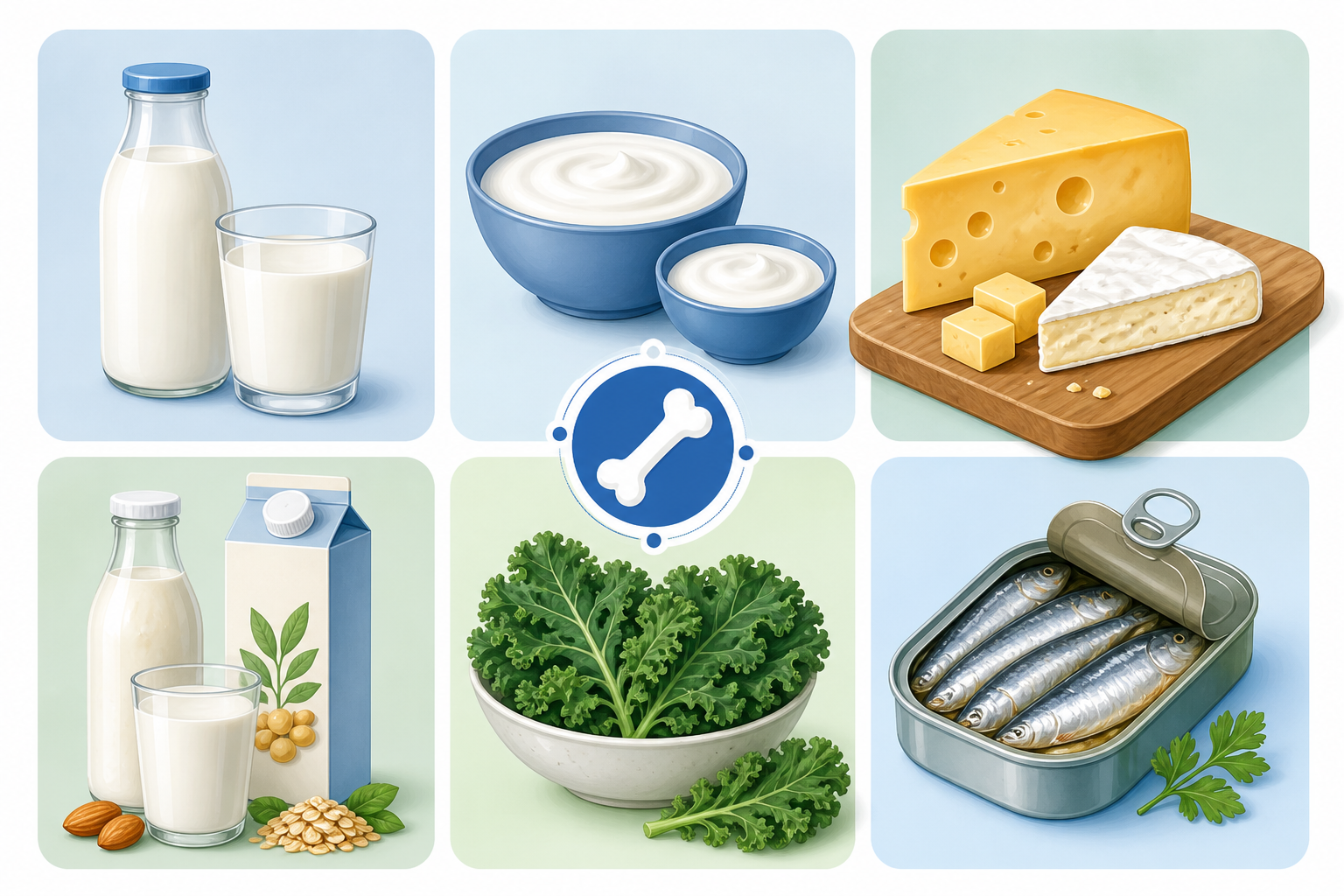
Daily calcium needs increase to 1,200 mg after age 50. Good sources include dairy products, fortified plant-based milks, calcium-set tofu, sardines with bones, and leafy greens like kale and collard greens.

Vitamin D helps your body absorb calcium efficiently. Your skin produces vitamin D when exposed to sunlight, but many women need supplementation, especially those living in northern climates or who spend most time indoors. Ask your healthcare provider about testing your vitamin D levels.

Real Dietitians, Real Results

Download on the App StoreGet it on Google Play

Phytoestrogens: Natural Plant Compounds

Phytoestrogens are naturally occurring plant compounds that can bind to estrogen receptors in your body, producing weak estrogen-like effects. While they're not a replacement for hormone therapy, some women find these foods that help hot flashes provide mild symptom relief.

The main types of phytoestrogens include:

  • Isoflavones found in soy foods like tofu, tempeh, edamame, and soy milk
  • Lignans present in flaxseeds, sesame seeds, and whole grains
  • Coumestans found in alfalfa sprouts and split peas

Research on phytoestrogens shows mixed but promising results. Some studies suggest that women who regularly consume soy foods experience fewer hot flashes, while other research shows minimal effects. Start with whole food sources rather than supplements, as isolated compounds may not work the same way as foods in their natural form.

Real Dietitians, Real Results

Download on the App StoreGet it on Google Play

Magnesium for Sleep and Mood

Many women find their sleep quality deteriorates during menopause. Magnesium supports relaxation, helps regulate neurotransmitters involved in mood, and may reduce the frequency of hot flashes for some women.

Good magnesium sources include:

  • Dark leafy greens like spinach and Swiss chard
  • Nuts and seeds, especially pumpkin seeds and almonds
  • Avocados
  • Dark chocolate (at least 70% cacao)
  • Whole grains like brown rice and quinoa

B Vitamins for Energy and Metabolism

Fatigue is one of the most overlooked menopause symptoms. B vitamins help convert food into energy and support your nervous system during hormonal transitions. They're also essential for metabolizing homocysteine, an amino acid linked to cardiovascular risk when elevated.

Real Dietitians, Real Results

Download on the App StoreGet it on Google Play

Focus on getting B vitamins from food sources:

  • B12 from animal products or fortified foods
  • Folate from leafy greens, legumes, and avocados
  • B6 from poultry, fish, potatoes, and bananas

Omega-3 Fatty Acids for Heart and Mood Support

After menopause, women's risk of heart disease increases significantly. Omega-3 fatty acids support cardiovascular health by reducing inflammation, improving cholesterol profiles, and helping maintain healthy blood vessels. Some research also suggests omega-3s may help stabilize mood and reduce depression symptoms.

Include omega-3-rich foods regularly:

Real Dietitians, Real Results

Download on the App StoreGet it on Google Play
  • Fatty fish like salmon, sardines, mackerel, and herring (aim for 2-3 servings per week)
  • Walnuts and chia seeds
  • Flaxseed oil and ground flaxseeds
  • Fortified foods like some eggs and yogurts

Foods to Include in a Menopause Diet

A clean, educational infographic-style illustration showing calcium-rich foods including milk, yogurt, cheese, fortified plant milks, kale, and sardines, arranged in a visually appealing grid layout. Soft, professional health illustration style with a cohesive color palette of blues and greens.

Building a menopause-supportive diet means emphasizing whole, nutrient-dense foods while limiting those that trigger symptoms or increase health risks. Here's what to prioritize.

Calcium-Rich Foods

Aim for 2-3 servings of calcium-rich foods daily:

Real Dietitians, Real Results

Download on the App StoreGet it on Google Play
  • Greek yogurt or kefir for probiotics and calcium
  • Fortified plant milks if you prefer dairy-free options
  • Canned sardines or salmon with bones
  • Collard greens, bok choy, and kale
  • Calcium-set tofu

Fiber-Rich Foods for Weight Management and Heart Health

Fiber helps stabilize blood sugar, supports healthy cholesterol levels, and promotes satiety, which can help with the weight gain many women experience during menopause.

High-fiber foods to include daily:

  • Beans, lentils, and chickpeas
  • Berries, apples, and pears with skins
  • Whole grains like oats, quinoa, and barley
  • Vegetables at every meal
  • Nuts and seeds

Quality Protein for Muscle Maintenance

Muscle mass naturally decreases with age, and lower estrogen accelerates this process. Eating adequate protein helps preserve muscle, especially when combined with strength training.

Real Dietitians, Real Results

Download on the App StoreGet it on Google Play

Include protein at every meal:

  • Eggs, poultry, and lean meats
  • Fish, especially fatty varieties
  • Greek yogurt and cottage cheese
  • Legumes and tofu
  • A moderate amount of protein powder if needed to meet needs

Heart-Healthy Fats

Don't fear fats during menopause. The right fats support hormone production, nutrient absorption, and cardiovascular health.

Healthy fat sources:

Real Dietitians, Real Results

Download on the App StoreGet it on Google Play
  • Extra virgin olive oil as your primary cooking oil
  • Avocados and avocado oil
  • Nuts, especially walnuts and almonds
  • Fatty fish
  • Seeds like chia, flax, and pumpkin

Foods and Habits to Limit During Menopause

Certain foods and beverages can trigger or worsen symptoms for many women. Identifying your personal triggers through careful observation can help you make informed choices.

Caffeine and Alcohol

Both caffeine and alcohol are among the most common hot flash triggers. Caffeine can increase heart rate and body temperature, potentially triggering hot flashes, while alcohol can cause blood vessel dilation that worsens night sweats.

Consider:

Real Dietitians, Real Results

Download on the App StoreGet it on Google Play
  • Switching to decaffeinated coffee or herbal teas
  • Limiting alcohol to occasional servings
  • Avoiding both in the hours before bed

Spicy Foods

Capsaicin, the compound that makes peppers spicy, can raise body temperature and trigger sweating. If you notice hot flashes after eating spicy foods, reducing the heat in your meals may help.

High-Sodium Foods

Excess sodium contributes to high blood pressure and water retention. As cardiovascular risk increases after menopause, limiting sodium becomes even more important.

Reduce intake of:

Real Dietitians, Real Results

Download on the App StoreGet it on Google Play
  • Processed and packaged foods
  • Restaurant and fast food meals
  • Cured and processed meats
  • Canned soups and vegetables (choose low-sodium versions)

Refined Sugars and Processed Foods

Refined carbohydrates cause rapid blood sugar spikes and crashes that can worsen mood swings, fatigue, and cravings. They also contribute to weight gain and inflammation.

Limit:

  • Sugary beverages and sodas
  • White bread, pasta, and rice
  • Packaged snacks and desserts
  • Foods with long ingredient lists full of unrecognizable additives

A Sample Day of Eating for Menopause Support

Wondering what this looks like in practice? Here's an example of a day focused on the best diet for menopause symptoms:

Real Dietitians, Real Results

Download on the App StoreGet it on Google Play

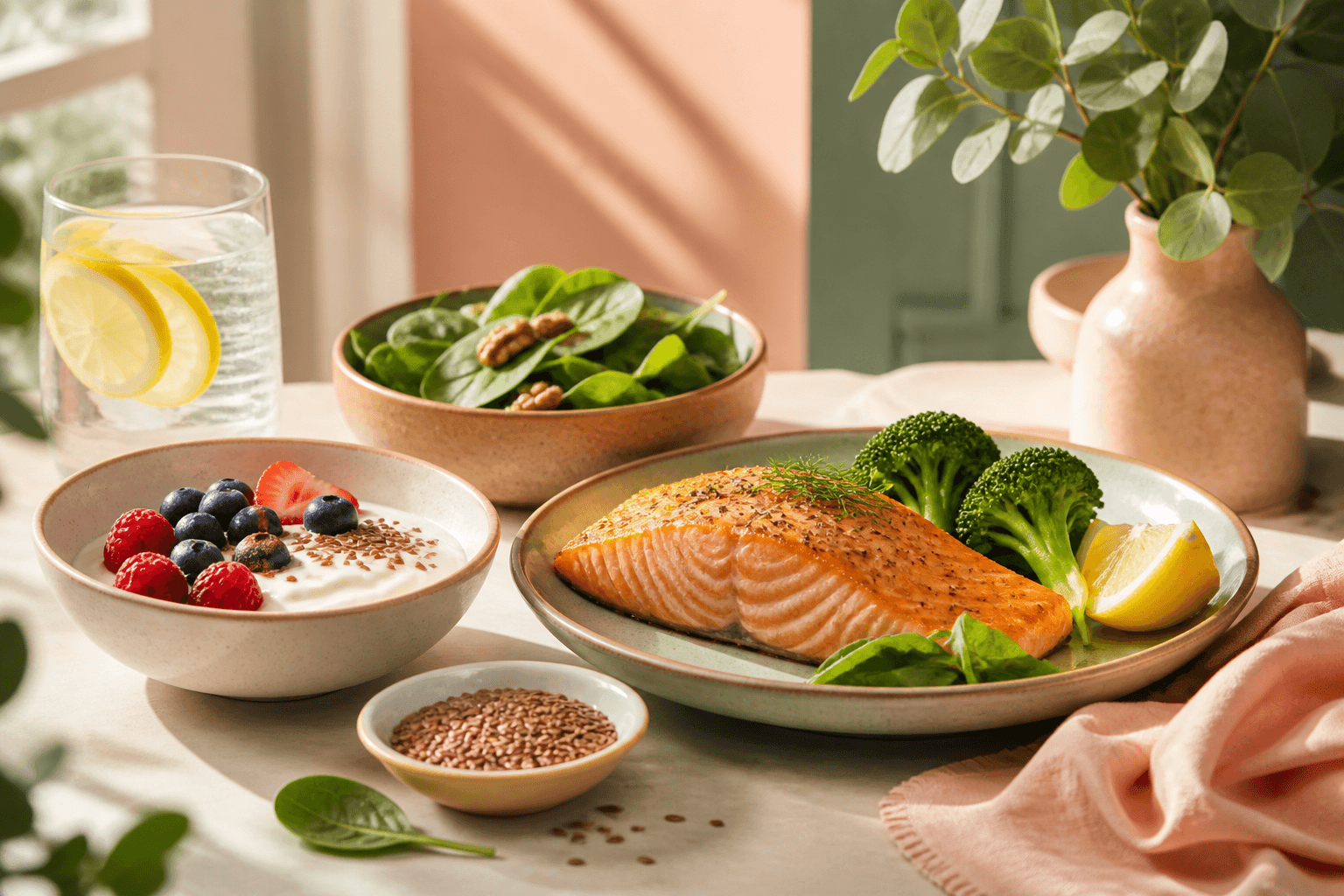
Breakfast: Greek yogurt with berries, ground flaxseed, and a handful of walnuts. This provides protein, calcium, omega-3s, and phytoestrogens in one bowl.

Mid-morning: A cup of chamomile tea and a small apple or pear.

Lunch: Grilled salmon over a large mixed green salad with avocado, chickpeas, olive oil, and lemon juice. This offers omega-3s, fiber, and heart-healthy fats.

Real Dietitians, Real Results

Download on the App StoreGet it on Google Play

Afternoon snack: Hummus with vegetable sticks and a few whole-grain crackers.

Dinner: Stir-fried tofu with broccoli, bell peppers, and brown rice, seasoned with ginger and garlic (skip the spicy chili if that triggers symptoms).

Evening: A small square of dark chocolate and a cup of warm oat milk or herbal tea.

Real Dietitians, Real Results

Download on the App StoreGet it on Google Play

Meal Timing for Blood Sugar Stability

Eating at regular intervals helps maintain steady blood sugar, which can reduce mood swings, cravings, and energy crashes. Try to eat every 3-4 hours and avoid going long periods without food.

Including protein and fiber at each meal and snack slows digestion and provides sustained energy. This approach also helps with sleep, as large meals close to bedtime can trigger night sweats.

Hydration Matters

Drink water throughout the day, as dehydration can worsen fatigue, headaches, and concentration. Some women find that staying well-hydrated also helps reduce hot flash severity. Aim for water as your primary beverage, flavoring it with lemon, cucumber, or mint if plain water feels monotonous.

Real Dietitians, Real Results

Download on the App StoreGet it on Google Play

Menopause Diet for Weight Loss

Weight gain during menopause is frustratingly common. Metabolic rate naturally decreases with age, and the loss of muscle mass means your body burns fewer calories at rest. Hormonal changes also shift fat storage toward the abdomen.

However, weight management during menopause is possible with the right approach.

Prioritize Protein and Strength Training

Muscle tissue burns more calories than fat tissue, even at rest. Preserving and building muscle through adequate protein intake and regular strength training is one of the most effective strategies for maintaining a healthy weight.

Real Dietitians, Real Results

Download on the App StoreGet it on Google Play

Aim for 25-30 grams of protein per meal and include strength training exercises 2-3 times per week. This combination helps counteract the muscle loss that naturally occurs with aging.

Practice Mindful Eating

Slow down during meals, paying attention to hunger and fullness cues. Eating without distractions, chewing thoroughly, and stopping when comfortably satisfied rather than stuffed can help prevent overeating.

Mindful eating strategies include:

Real Dietitians, Real Results

Download on the App StoreGet it on Google Play
  • Eating without screens or phones
  • Putting your fork down between bites
  • Asking yourself if you're truly hungry before reaching for food
  • Noticing emotional eating triggers like stress or boredom

Focus on Food Quality Over Restriction

Rather than drastically cutting calories, which can slow metabolism further, focus on nutrient-dense whole foods that satisfy hunger naturally. A menopause diet for weight loss should feel nourishing, not punishing.

When to Consult a Healthcare Provider or Dietitian

While nutrition can significantly support your wellbeing during menopause, some situations warrant professional guidance:

Seek personalized advice if you experience:

Real Dietitians, Real Results

Download on the App StoreGet it on Google Play
  • Severe symptoms that interfere with daily life
  • Rapid or concerning weight changes
  • Signs of nutrient deficiencies
  • Multiple food intolerances or dietary restrictions
  • Other health conditions like diabetes or high blood pressure
  • Difficulty maintaining healthy eating habits despite your best efforts

A registered dietitian can help you create a personalized eating plan that addresses your specific symptoms, food preferences, and health goals. They can also help you navigate conflicting nutrition information and identify triggers unique to your body.

Finding Your Path Through Menopause

Every woman's menopause journey is different. What works wonderfully for your friend may have little effect on your symptoms, and that's completely normal. The key is to approach nutrition with curiosity and patience, making gradual changes and observing how your body responds.

Start with one or two changes rather than overhauling your entire diet overnight. Perhaps begin by adding a serving of fatty fish each week or swapping your afternoon coffee for herbal tea. Small, sustainable changes accumulate into significant improvements over time.

Real Dietitians, Real Results

Download on the App StoreGet it on Google Play

Remember that nutrition is one piece of a larger puzzle. Regular physical activity, quality sleep, stress management, and appropriate medical care all work together to support your health during this transition.

If you're feeling overwhelmed by conflicting advice or struggling to find what works for your body, you don't have to figure it out alone. Nutrista connects women with registered dietitians who specialize in hormonal health and menopause nutrition. Unlike generic calorie-tracking apps that offer only AI-generated recommendations, Nutrista provides access to a community of real, qualified dietitians who use modern technology to deliver personalized guidance. They understand the nuances of menopause and can work with you to create a realistic, evidence-based plan tailored to your life.

This article provides general educational information and is not a substitute for medical advice. Always consult with your healthcare provider before making significant dietary changes, especially if you're taking hormone therapy or have other health conditions. Your doctor and a registered dietitian can help you develop a comprehensive approach that's safe and effective for your individual needs.

Real Dietitians, Real Results

Download on the App StoreGet it on Google Play
#menopause#nutrition#hormonal balance

Others Viewed