




cholesterol

Lowering Cholesterol Naturally: What to Eat and Avoid for Heart Health

Nutrista Team
Share
Lowering Cholesterol Naturally: What to Eat and Avoid for Heart Health

Lowering Cholesterol Naturally: What to Eat and Avoid for Heart Health

If you have recently been told your cholesterol levels are higher than they should be, you are not alone. Millions of people receive this news every year, and it can feel overwhelming at first. You may be wondering what this means for your heart health and whether you will need medication indefinitely.

The encouraging news is that for many people, dietary changes can make a meaningful difference. What you eat has a direct impact on your cholesterol levels and overall cardiovascular health. With the right knowledge and some practical strategies, you can take an active role in managing your cholesterol naturally.

Understanding Cholesterol: LDL vs HDL Explained

Before diving into dietary recommendations, it helps to understand what cholesterol actually is and why the different types matter.

Real Dietitians, Real Results

Download on the App StoreGet it on Google Play

Cholesterol is a waxy, fat-like substance your body needs to build cells and produce certain hormones. Your liver makes all the cholesterol your body requires, but you also get cholesterol from animal-based foods like meat, eggs, and dairy.

What Is LDL Cholesterol?

LDL (low-density lipoprotein) is often called "bad" cholesterol because it can build up in your artery walls, forming plaque that narrows and hardens your arteries. This condition, called atherosclerosis, increases your risk of heart attack and stroke.

When people talk about how to reduce LDL naturally, they are typically focused on lowering this type of cholesterol through diet and lifestyle changes.

Real Dietitians, Real Results

Download on the App StoreGet it on Google Play

What Is HDL Cholesterol?

HDL (high-density lipoprotein) is known as "good" cholesterol because it helps remove excess cholesterol from your bloodstream and carries it back to your liver for disposal. Higher HDL levels are generally associated with lower heart disease risk.

The goal is not just to lower total cholesterol, but to improve the ratio between LDL and HDL while reducing harmful triglycerides.

Foods That Lower Cholesterol Naturally

Making thoughtful food choices is one of the most powerful tools you have for managing cholesterol. Research consistently shows that certain foods can actively help reduce LDL levels.

Real Dietitians, Real Results

Download on the App StoreGet it on Google Play

Soluble Fiber: Your Heart's Best Friend

Soluble fiber is particularly effective at lowering cholesterol because it binds to cholesterol in your digestive system and helps remove it from your body before it enters your bloodstream.

Getting 5 to 10 grams of soluble fiber daily can reduce LDL cholesterol by 5 to 10 percent.

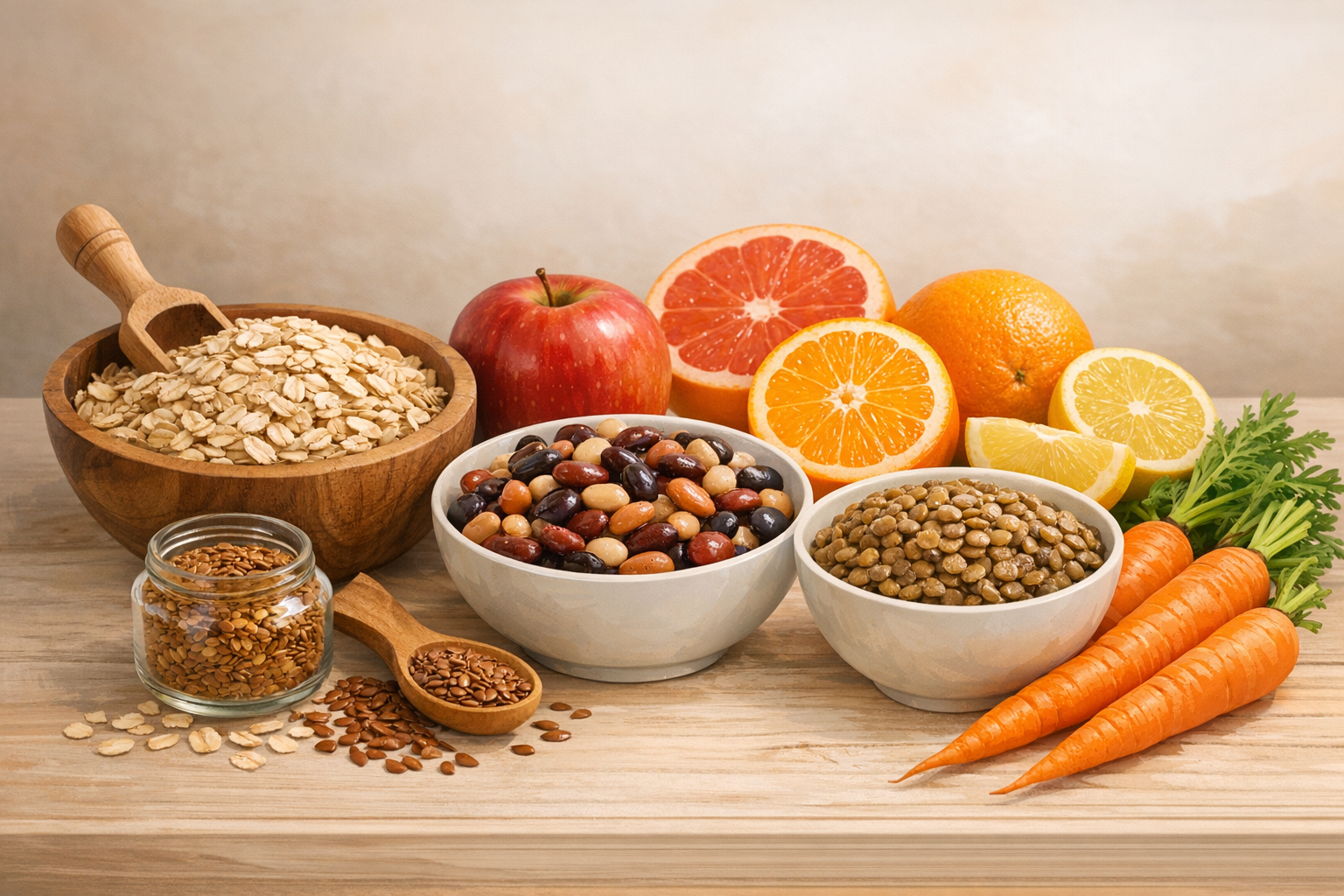
A visual arrangement of foods rich in soluble fiber including oats, beans, lentils, apples, citrus fruits, carrots, and flaxseeds displayed in a clean, educational style with soft natural lighting and a warm color palette

Real Dietitians, Real Results

Download on the App StoreGet it on Google Play

Top soluble fiber sources to include in your cholesterol-lowering diet plan:

  • Oats and oat bran – Start your day with steel-cut or rolled oats; one serving provides about 2 grams of soluble fiber
  • Beans and lentils – These versatile legumes offer 3 to 5 grams of soluble fiber per half-cup serving
  • Apples, citrus fruits, and berries – Whole fruits with their skin provide fiber plus beneficial antioxidants
  • Barley and quinoa – Nutritious whole grains that work well as side dishes or salad bases
  • Flaxseeds and chia seeds – Add these to smoothies, oatmeal, or yogurt for an easy fiber boost
  • Carrots, Brussels sprouts, and okra – Vegetables that contribute both soluble fiber and important vitamins

Omega-3 Rich Foods for Heart Health

While omega-3 fatty acids do not directly lower LDL cholesterol, they are incredibly valuable for cardiovascular wellness. Omega-3s help reduce inflammation, lower triglycerides, and may modestly increase HDL cholesterol.

Best sources of omega-3 fatty acids:

Real Dietitians, Real Results

Download on the App StoreGet it on Google Play
  • Fatty fish such as salmon, mackerel, sardines, and trout (aim for two servings per week)
  • Walnuts and walnut oil
  • Ground flaxseeds and flaxseed oil
  • Chia seeds
  • Hemp seeds

Nuts and Heart-Healthy Fats

Studies show that eating a small handful of nuts daily can reduce LDL cholesterol by up to 5 percent. Nuts contain unsaturated fats, fiber, and plant sterols that all support heart health.

Best nuts for lowering cholesterol:

  • Almonds
  • Walnuts
  • Pistachios
  • Hazelnuts
  • Pecans

Stick to about one ounce (a small handful) per day, as nuts are calorie-dense.

Real Dietitians, Real Results

Download on the App StoreGet it on Google Play

Olive Oil and the Mediterranean Diet Approach

Extra virgin olive oil is a cornerstone of the Mediterranean diet, which has been extensively studied and proven to support heart health. Olive oil contains antioxidants and monounsaturated fats that can help lower LDL while maintaining or even raising HDL cholesterol.

Use olive oil as your primary cooking fat, drizzle it over vegetables, or use it as a base for homemade salad dressings.

Plant Sterols and Stanols

Plant sterols and stanols are naturally occurring compounds that block your body from absorbing cholesterol. They are found in small amounts in many plant foods and are also added to certain fortified products.

Real Dietitians, Real Results

Download on the App StoreGet it on Google Play

Getting 2 grams of plant sterols daily can reduce LDL by 5 to 15 percent. Look for fortified margarines, orange juice, and yogurt drinks, or find them naturally in small amounts in vegetable oils, nuts, and legumes.

Foods to Avoid with High Cholesterol

Just as some foods can help lower cholesterol, others can raise your LDL levels and increase heart disease risk. Knowing what to limit is just as important as knowing what to eat.

Saturated Fats: The Primary Concern

Saturated fats raise LDL cholesterol more than any other dietary factor. The American Heart Association recommends limiting saturated fat to less than 6 percent of your total daily calories.

Real Dietitians, Real Results

Download on the App StoreGet it on Google Play

Foods high in saturated fat to limit:

  • Fatty cuts of beef, pork, and lamb
  • Full-fat dairy products including butter, whole milk, and cheese
  • Poultry with skin
  • Tropical oils like coconut oil and palm oil
  • Processed snack foods and baked goods

Trans Fats: The Worst Offender

Trans fats are doubly harmful because they raise LDL cholesterol while simultaneously lowering HDL cholesterol. Many countries have restricted or banned artificial trans fats, but they may still appear in some processed foods.

Check ingredient labels for "partially hydrogenated oils" and avoid products containing them.

Real Dietitians, Real Results

Download on the App StoreGet it on Google Play

Processed Meats

Bacon, sausage, hot dogs, and deli meats are typically high in both saturated fat and sodium. Processed meats have been linked to increased heart disease risk beyond their cholesterol-raising effects.

Choose these alternatives instead:

  • Fresh, unprocessed poultry and fish
  • Plant-based proteins like beans, lentils, and tofu
  • Occasional lean cuts of red meat (no more than a few times per month)

Refined Carbohydrates and Added Sugars

While the focus is often on fats, refined carbohydrates and added sugars can negatively affect your cholesterol profile by raising triglycerides and lowering HDL cholesterol.

Real Dietitians, Real Results

Download on the App StoreGet it on Google Play

Limit these foods:

  • White bread, white rice, and regular pasta
  • Sugary beverages including soda and sweetened juices
  • Pastries, cookies, cakes, and candy
  • Most breakfast cereals with added sugar

How Soluble Fiber Works to Reduce Cholesterol

Understanding the mechanism behind soluble fiber can help motivate you to include more of it in your diet.

When you eat foods containing soluble fiber, the fiber dissolves in water to form a gel-like substance in your digestive tract. This gel binds to cholesterol and bile acids, preventing them from being absorbed into your bloodstream.

Real Dietitians, Real Results

Download on the App StoreGet it on Google Play

Your liver then needs to pull more cholesterol from your blood to produce new bile acids, which further reduces your circulating LDL levels. This is why soluble fiber is such an effective, natural way to lower cholesterol.

The Mediterranean Diet: A Proven Heart-Healthy Approach

The Mediterranean diet is one of the most researched eating patterns for cardiovascular wellness. Studies consistently show it can reduce LDL cholesterol, lower blood pressure, and decrease the risk of heart disease.

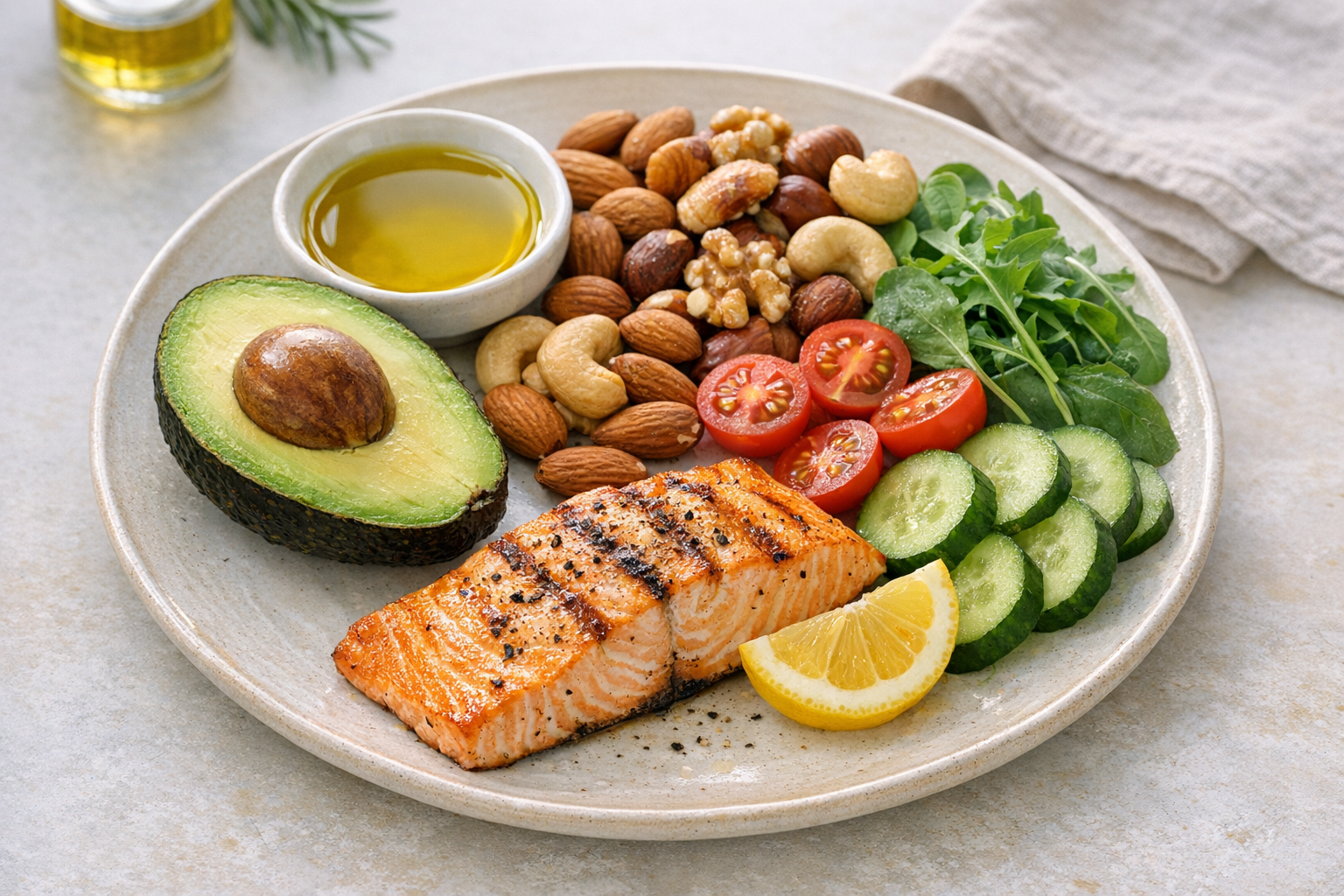
A Mediterranean-style plate composition showing heart-healthy fats including olive oil in a small dish, avocado, mixed nuts, grilled salmon, and fresh vegetables photographed with natural lighting and a clean aesthetic

Real Dietitians, Real Results

Download on the App StoreGet it on Google Play

Key principles of the Mediterranean diet:

  • Abundant vegetables, fruits, and whole grains
  • Olive oil as the primary fat source
  • Fish and seafood at least twice weekly
  • Moderate amounts of poultry, eggs, and dairy
  • Limited red meat
  • Minimal processed foods
  • Emphasis on meals enjoyed with others

This approach naturally incorporates many cholesterol-lowering foods while limiting those that raise LDL.

Cholesterol-Lowering Diet Plan: A Sample Day of Eating

Putting everything together into practical meals can help you get started. Here is an example of what to eat with high cholesterol for a full day:

Real Dietitians, Real Results

Download on the App StoreGet it on Google Play

Breakfast:

  • Bowl of steel-cut oats topped with fresh berries, ground flaxseeds, and a sprinkle of walnuts
  • Cup of green tea

Morning Snack:

  • Apple slices with a small handful of almonds

Lunch:

  • Large mixed green salad with grilled salmon, avocado, cherry tomatoes, and olive oil vinaigrette
  • Side of quinoa or barley

Afternoon Snack:

  • Carrot sticks with hummus

Dinner:

  • Lentil and vegetable soup
  • Side of roasted Brussels sprouts with olive oil and garlic
  • Small piece of whole grain bread

Evening:

  • Herbal tea or a small serving of fresh fruit

This sample day provides abundant soluble fiber, healthy fats, and plant-based proteins while keeping saturated fat and refined carbohydrates low.

The Role of Plant-Based Proteins

Incorporating more plant-based proteins is one of the most effective strategies for lowering cholesterol. Unlike animal proteins, plant proteins come packaged with fiber and without dietary cholesterol.

Excellent plant protein sources:

Real Dietitians, Real Results

Download on the App StoreGet it on Google Play
  • Beans, lentils, and chickpeas
  • Tofu, tempeh, and edamame
  • Quinoa
  • Nuts and seeds
  • Seitan (wheat protein)

You do not need to become fully vegetarian to benefit. Simply replacing a few meat-based meals each week with plant-based alternatives can make a meaningful difference in your cholesterol levels.

Lifestyle Factors That Support Healthy Cholesterol

Diet is foundational, but other lifestyle factors also play important roles in managing cholesterol and protecting your heart.

Regular Physical Activity

Exercise can raise HDL cholesterol by up to 5 percent while helping lower triglycerides. Aim for at least 150 minutes of moderate-intensity aerobic activity per week, such as brisk walking, swimming, or cycling.

Real Dietitians, Real Results

Download on the App StoreGet it on Google Play

Resistance training twice weekly provides additional benefits for metabolism and overall health.

Maintain a Healthy Weight

Carrying excess weight, particularly around your midsection, is associated with higher LDL and lower HDL cholesterol. Losing even a modest amount of weight (5 to 10 percent of your body weight) can improve your cholesterol profile.

Manage Stress Levels

Chronic stress may contribute to higher cholesterol levels through various mechanisms, including stress-related eating and hormonal changes. Consider incorporating stress-management techniques such as mindfulness meditation, deep breathing exercises, adequate sleep, and social connection.

Real Dietitians, Real Results

Download on the App StoreGet it on Google Play

Avoid Tobacco

If you smoke, quitting is one of the most important things you can do for your heart health. Smoking damages blood vessels and significantly increases heart disease risk, independent of cholesterol levels.

When to Consult a Healthcare Provider or Dietitian

While dietary changes can be powerful, they are not always sufficient on their own. Consult a healthcare provider if:

  • Your cholesterol levels remain high despite dietary changes
  • You have other cardiovascular risk factors such as diabetes, high blood pressure, or a family history of early heart disease
  • You are unsure how to interpret your lab results
  • You take medications that may interact with dietary changes

A registered dietitian can provide personalized guidance tailored to your specific health needs, food preferences, and lifestyle. This is particularly valuable if you have multiple health conditions or find it difficult to make sustainable changes on your own.

Real Dietitians, Real Results

Download on the App StoreGet it on Google Play

Getting Personalized Support for Your Heart Health Journey

Making lasting dietary changes is often easier with professional guidance. Generic calorie-tracking apps can help you log meals, but they cannot provide the nuanced, personalized advice that comes from working with a qualified nutrition professional.

Nutrista connects you with registered dietitians who can create a cholesterol-lowering plan tailored specifically to your needs. These are real, credentialed professionals who understand the science of nutrition and can help you navigate the practical challenges of changing your diet.

Unlike apps that rely solely on AI-generated recommendations, Nutrista empowers registered dietitians with artificial intelligence tools so they can provide modern, evidence-based support while maintaining the human connection that makes behavior change sustainable. You get the best of both worlds: professional expertise enhanced by technology.

Real Dietitians, Real Results

Download on the App StoreGet it on Google Play

Final Thoughts

Learning that you have high cholesterol can feel discouraging, but you have more control than you might think. By focusing on heart-healthy foods—soluble fiber, omega-3 rich fish, nuts, olive oil, and plant-based proteins—while limiting saturated fats, trans fats, and refined carbohydrates, you can make meaningful improvements to your cardiovascular health.

Start with small, sustainable changes rather than overhauling everything at once. Add a serving of oats to your morning routine. Swap butter for olive oil. Include fish twice a week. These incremental changes add up over time.

Remember that managing cholesterol is a long-term commitment, not a quick fix. Be patient with yourself, celebrate small victories, and do not hesitate to seek professional support when you need it.

Real Dietitians, Real Results

Download on the App StoreGet it on Google Play

Your heart is worth the effort.


This article provides general educational information and is not a substitute for personalized medical advice. Always consult with a healthcare provider or registered dietitian before making significant changes to your diet, especially if you have existing health conditions or take medications.

Real Dietitians, Real Results

Download on the App StoreGet it on Google Play
#cholesterol#heart health#heart-healthy diet

Others Viewed