FODMAP diet

Low FODMAP Diet for Beginners: A Complete Guide to Digestive Relief

Nutrista Team
Share
Low FODMAP Diet for Beginners: A Complete Guide to Digestive Relief

Low FODMAP Diet for Beginners: A Complete Guide to Digestive Relief

If you've ever cancelled plans because of bloating, or spent hours wondering why a seemingly healthy meal left you in discomfort, you're not alone. Digestive struggles can feel isolating and frustrating, especially when you cannot pinpoint exactly what is causing the problem.

The Low FODMAP diet has helped millions of people with irritable bowel syndrome (IBS) and other digestive issues finally find answers and relief. Developed by researchers at Monash University, this evidence-based approach is not another trendy diet. It is a systematic way to identify which carbohydrates trigger your symptoms so you can eat with confidence again.

This guide will walk you through everything you need to know about the Low FODMAP diet as a beginner, from understanding what FODMAPs are to practical strategies for getting started.

Real Dietitians, Real Results

Download on the App StoreGet it on Google Play

What Are FODMAPs and Why Do They Cause Digestive Problems?

FODMAP stands for Fermentable Oligosaccharides, Disaccharides, Monosaccharides, and Polyols. While that sounds complicated, it is simply a scientific way of describing a group of short-chain carbohydrates that many people struggle to digest properly.

When you eat foods containing FODMAPs, these carbohydrates travel through your digestive system largely undigested. Once they reach your large intestine, gut bacteria ferment them, producing gas as a byproduct. For people with sensitive guts, this fermentation process can trigger a cascade of uncomfortable symptoms.

Why Do Certain Foods Make Me Bloated?

If you have wondered why healthy foods like apples, onions, or beans leave you bloated and uncomfortable, FODMAPs may be the answer. These carbohydrates draw water into your intestine and produce gas during fermentation, which stretches the intestinal walls and causes pain, bloating, and changes in bowel habits.

Real Dietitians, Real Results

Download on the App StoreGet it on Google Play

Common symptoms of FODMAP sensitivity include:

  • Bloating and abdominal distension
  • Excessive gas and flatulence
  • Abdominal pain and cramping
  • Diarrhea, constipation, or alternating between both
  • Nausea and early satiety

Who Can Benefit from a Low FODMAP Diet?

Research shows that approximately 70-80% of people with IBS experience significant symptom improvement on a Low FODMAP diet. This approach may be particularly helpful if you have:

  • Irritable bowel syndrome (IBS)
  • Small intestinal bacterial overgrowth (SIBO)
  • Functional bloating or gas
  • Inflammatory bowel disease (IBD) in remission with ongoing IBS-like symptoms

However, this diet is not appropriate for everyone. People with eating disorders, those at risk of malnutrition, or individuals without digestive symptoms should not restrict FODMAPs unnecessarily.

Real Dietitians, Real Results

Download on the App StoreGet it on Google Play

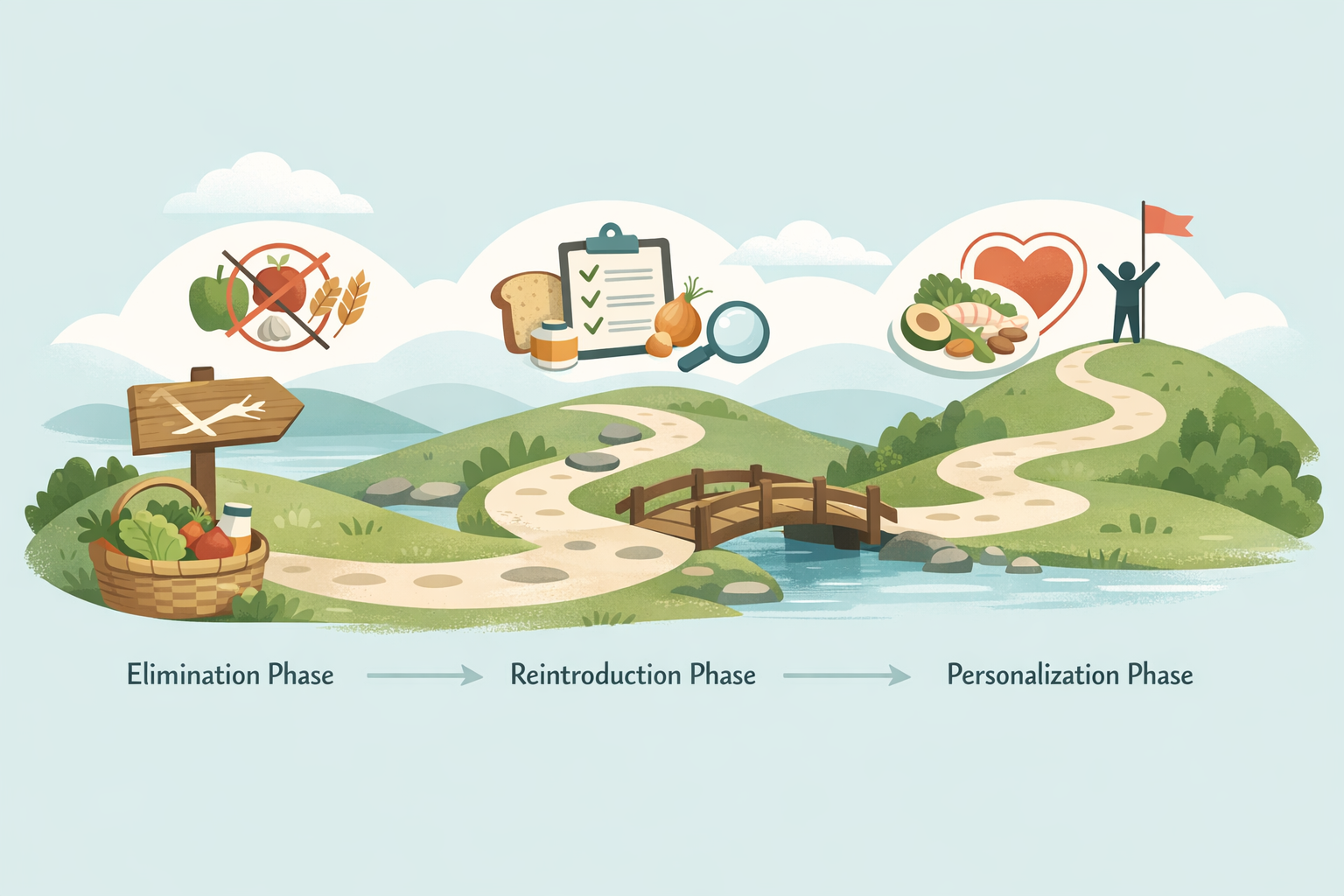
The Three Phases of the Low FODMAP Diet

A simple, clear infographic-style illustration showing the three phases of the Low FODMAP diet as a journey or path: Elimination phase, Reintroduction phase, and Personalization phase. Use soft, calming colors like sage green, warm beige, and light blue. Clean, modern design suitable for a health education article.

The Low FODMAP diet is not meant to be a permanent way of eating. Instead, it is a three-phase process designed to identify your specific trigger foods and create a sustainable, personalized eating pattern.

Phase 1: Elimination (2-6 Weeks)

During this initial phase, you strictly limit all high-FODMAP foods to calm your digestive system and establish a baseline. Most people notice symptom improvement within one to two weeks, though it can take up to six weeks for some individuals.

Real Dietitians, Real Results

Download on the App StoreGet it on Google Play

The goal is not to eliminate FODMAPs forever, but to reduce your symptoms so you can clearly identify triggers during the next phase.

Phase 2: Reintroduction (6-8 Weeks)

Once your symptoms have stabilized, you systematically test each FODMAP group to determine which ones cause problems for you. This phase requires patience and careful observation.

You will test:

  • Fructose (found in some fruits and sweeteners)
  • Lactose (found in dairy products)
  • Fructans (found in wheat, onions, and garlic)
  • Galactans (found in legumes and beans)
  • Polyols (found in stone fruits and certain vegetables)

Working with a registered dietitian during reintroduction is highly recommended, as the testing protocol can be tricky to navigate alone.

Real Dietitians, Real Results

Download on the App StoreGet it on Google Play

Phase 3: Personalization (Ongoing)

The final phase involves creating a long-term eating pattern that includes as many foods as possible while avoiding your specific triggers. Most people find they can tolerate some FODMAPs in moderate amounts, which allows for a much more varied and enjoyable diet.

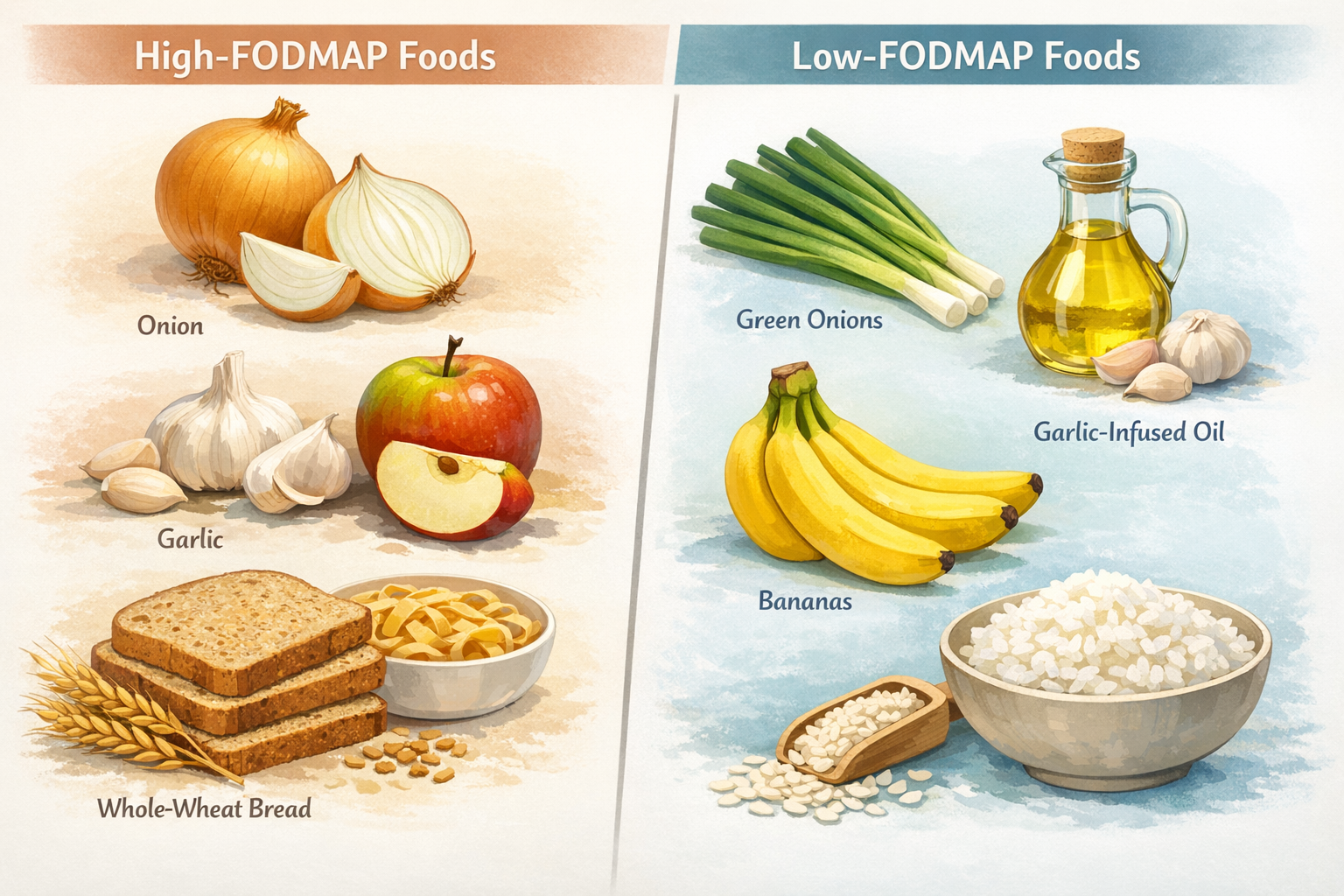
High-FODMAP Foods to Avoid During Elimination

An organized visual guide showing high-FODMAP foods on one side (like onions, garlic, apples, wheat bread) and low-FODMAP alternatives on the other side (green onions, garlic-infused oil, bananas, rice). Split composition with clear labels, using a professional health education style with soft colors.

Understanding which foods contain high levels of FODMAPs is essential for the elimination phase. Here are the main categories to be aware of.

Real Dietitians, Real Results

Download on the App StoreGet it on Google Play

High-Fructose Fruits

These fruits contain more fructose than glucose, which can cause digestive distress:

  • Apples and apple juice
  • Pears
  • Mangoes
  • Cherries
  • Watermelon
  • Dried fruits (raisins, dates, figs)
  • Canned fruit in syrup or juice

Lactose-Containing Dairy

Lactose is a disaccharide that many people have difficulty digesting:

  • Cow's milk (regular, skim, evaporated)
  • Soft cheeses (ricotta, cottage cheese, cream cheese)
  • Yogurt and ice cream
  • Condensed milk

Fructans

These are chains of fructose molecules found in many common foods:

  • Wheat-based products (bread, pasta, crackers, cereals)
  • Onions and shallots
  • Garlic
  • Rye and barley
  • Artichokes
  • Inulin and chicory root (often added to processed foods)

Galactans

These carbohydrates are found in legumes:

  • Most beans (kidney, black, baked beans)
  • Lentils
  • Chickpeas
  • Soybeans (except certain tofu products)

Polyols

Sugar alcohols found naturally in some foods and added to sugar-free products:

  • Stone fruits (peaches, plums, apricots, nectarines)
  • Mushrooms
  • Cauliflower
  • Snow peas
  • Artificial sweeteners (sorbitol, mannitol, xylitol, maltitol)

Low-FODMAP Foods You Can Enjoy

The good news is that there are plenty of delicious foods you can eat on a Low FODMAP diet. Focus on what you can include rather than dwelling on restrictions, and you will find this way of eating much more sustainable.

Low-FODMAP Fruits

  • Bananas (firm or slightly ripe)
  • Blueberries, strawberries, raspberries
  • Oranges, mandarins, clementines
  • Grapes
  • Kiwi
  • Pineapple
  • Cantaloupe and honeydew melon

Low-FODMAP Vegetables

  • Carrots
  • Spinach and kale
  • Zucchini
  • Green beans
  • Potatoes and sweet potatoes
  • Bell peppers
  • Cucumber
  • Lettuce and leafy greens
  • Tomatoes (in moderate portions)

Protein Sources

Most unprocessed proteins are naturally low in FODMAPs:

  • Meat (beef, chicken, pork, turkey)
  • Fish and seafood
  • Eggs
  • Tofu (firm)
  • Tempeh

Grains and Starches

  • Rice (white, brown, basmati)
  • Quinoa
  • Oats and oatmeal
  • Potatoes
  • Corn and polenta
  • Gluten-free breads and pastas (check labels for high-FODMAP ingredients)

Lactose-Free Dairy Options

  • Lactose-free milk
  • Hard cheeses (cheddar, parmesan, Swiss, brie)
  • Butter
  • Lactose-free yogurt
  • Almond milk (unsweetened)

Practical Tips for Starting a Low FODMAP Diet

Beginning any new eating plan can feel overwhelming, but these strategies will help set you up for success.

Reading Food Labels for Hidden FODMAPs

FODMAPs can hide in unexpected places. Watch for these ingredients on labels:

  • High-fructose corn syrup or corn syrup solids
  • Inulin, chicory root, or fructooligosaccharides (often added to fiber-fortified foods)
  • Honey, agave nectar, or molasses
  • Sugar alcohols ending in -ol (sorbitol, mannitol, xylitol)
  • Wheat flour in sauces, gravies, and processed foods

Dining Out Strategies

Eating at restaurants presents challenges, but it is certainly possible:

  • Research menus ahead of time and call with questions
  • Ask for sauces and dressings on the side
  • Request no onions or garlic in your dish
  • Choose simple grilled proteins with plain vegetables and rice
  • Bring your own safe snacks if needed

Meal Planning Basics

Planning ahead reduces stress and helps you stay on track:

  • Batch-cook Low FODMAP staples like rice, quinoa, and roasted vegetables
  • Keep simple meals on hand for busy days
  • Use garlic-infused olive oil to add flavor without the fructans
  • Stock your pantry with Low FODMAP basics

Common Mistakes to Avoid

  • Restricting too many foods unnecessarily - stick to the elimination phase for only 2-6 weeks
  • Skipping the reintroduction phase and staying on the strict diet long-term
  • Not eating enough due to fear of symptoms
  • Failing to seek professional guidance when struggling

Sample Day of Low FODMAP Eating

A photographed meal prep scene showing low-FODMAP meal components in glass containers: grilled salmon, steamed carrots and green beans, quinoa, and fresh blueberries. Clean, bright, appetizing presentation on a white marble counter with natural lighting.

Real Dietitians, Real Results

Download on the App StoreGet it on Google Play

Here is a simple meal plan to give you an idea of what a day on the Low FODMAP diet might look like:

Breakfast: Oatmeal made with lactose-free milk or almond milk, topped with sliced banana, blueberries, and a sprinkle of cinnamon.

Lunch: Grilled chicken salad with mixed greens, carrots, cucumber, tomatoes, and a homemade vinaigrette made with olive oil and lemon juice. Serve with a side of gluten-free crackers.

Real Dietitians, Real Results

Download on the App StoreGet it on Google Play

Dinner: Baked salmon seasoned with lemon, herbs, and garlic-infused olive oil, served with steamed green beans and quinoa.

Snacks: Hard-boiled egg, a handful of almonds, or rice cakes with lactose-free cheese.

This sample day shows that Low FODMAP eating can be satisfying and flavorful while supporting your digestive health.

Real Dietitians, Real Results

Download on the App StoreGet it on Google Play

When to Seek Professional Help

The Low FODMAP diet is complex, and attempting it alone can lead to unnecessary restrictions, nutritional deficiencies, or frustration. Working with a registered dietitian who specializes in digestive health can make the difference between success and giving up.

Consider seeking professional guidance if:

  • You are unsure how to start the elimination phase
  • Your symptoms are not improving after 2-3 weeks
  • You are struggling with the reintroduction process
  • You have multiple food allergies or other dietary restrictions
  • You have a history of disordered eating

Nutrista connects people with qualified registered dietitians who can provide personalized guidance for digestive health conditions. Their platform empowers real, local, and international registered dietitians with artificial intelligence tools, allowing them to offer modern, evidence-based support to clients.

Unlike generic calorie-tracking apps that only offer AI-generated advice, Nutrista provides access to a large community of vetted, registered dietitians who understand the complexities of conditions like IBS. A real dietitian can help you navigate the nuances of FODMAP reintroduction, ensure you are meeting your nutritional needs, and create a sustainable long-term eating plan tailored to your unique situation.

Real Dietitians, Real Results

Download on the App StoreGet it on Google Play

Finding Relief Takes Patience

Living with chronic digestive symptoms can be exhausting, but the Low FODMAP diet offers real hope. Research consistently shows that this approach helps the majority of people with IBS achieve meaningful symptom relief.

Remember that this process takes time. The elimination phase requires commitment, and reintroduction demands careful attention. Be patient with yourself, and celebrate small victories along the way. Many people find that they only need to avoid a few specific triggers long-term, allowing them to return to a varied and enjoyable diet.

You deserve to eat without fear and live without constant digestive discomfort. With the right information and support, relief is possible.

Real Dietitians, Real Results

Download on the App StoreGet it on Google Play

Before making significant dietary changes, consult with your healthcare provider or a registered dietitian to ensure the Low FODMAP diet is appropriate for your individual health needs. If you are ready to start this journey with professional support, Nutrista can connect you with experienced dietitians who specialize in digestive health and can guide you through each phase of the process.

Real Dietitians, Real Results

Download on the App StoreGet it on Google Play
#FODMAP diet#IBS nutrition#digestive health

Others Viewed