




The Batch Cooking Burnout: Why 94% of Meal Preppers Fail by Jan 22nd 😱
Stop wasting your Sundays! 😱 Discover why your meal prep keeps failing and how Nutrista AI is fixing the broken $700 billion grocery industry for good. 🥗🔥

If you have recently received an A1C result that was higher than expected, you are not alone. Many people living with prediabetes or type 2 diabetes feel overwhelmed when trying to understand what those numbers actually mean for their daily lives. The good news is that dietary changes can make a meaningful difference in your A1C levels over time.
This guide will walk you through exactly what A1C measures, how different foods affect your blood sugar, and practical strategies you can start using today. You will also learn about common pitfalls that can sabotage your progress and when to seek professional support.
When you want to understand your blood sugar control over time, the A1C test is one of the most important tools available. Unlike a fasting glucose test, which only shows your blood sugar at a single moment, the A1C test measures your average blood sugar levels over the past two to three months.
Here is why that matters: blood sugar fluctuates constantly throughout the day based on what you eat, your activity level, stress, and sleep. A single glucose reading cannot tell the full story. The A1C test captures the bigger picture by measuring how much glucose has attached to your hemoglobin, a protein in your red blood cells.
A1C targets vary by individual, but general guidelines include:
Your doctor may recommend a different target based on your age, how long you have had diabetes, other health conditions you manage, and your risk of low blood sugar. Always discuss your personal A1C goal with your healthcare team.
Understanding how various foods impact your blood sugar is essential for learning how to lower A1C naturally. Not all carbohydrates behave the same way in your body, and the right combinations of nutrients can help stabilize your glucose throughout the day.
Carbohydrates have the biggest direct impact on blood sugar, but the type of carbohydrate matters significantly.
Simple carbohydrates break down quickly in your body, causing rapid spikes in blood sugar. These include:
Complex carbohydrates digest more slowly, leading to a gradual rise in blood sugar rather than a sharp spike. Good sources include:
Choosing complex carbohydrates more often than simple ones can help you maintain steadier blood sugar levels, which contributes to a lower A1C over time.
Fiber is a type of carbohydrate that your body cannot digest, which means it does not raise your blood sugar. In fact, fiber slows down the absorption of other carbohydrates, helping to prevent blood sugar spikes after meals.
Aim for 25 to 35 grams of fiber per day from sources like:
Increasing your fiber intake gradually and drinking plenty of water can help prevent digestive discomfort.
Including protein and healthy fats at every meal helps slow digestion and keeps blood sugar more stable. This combination also helps you feel fuller longer, which can support weight management goals.
Good protein sources include:
Healthy fats to incorporate:

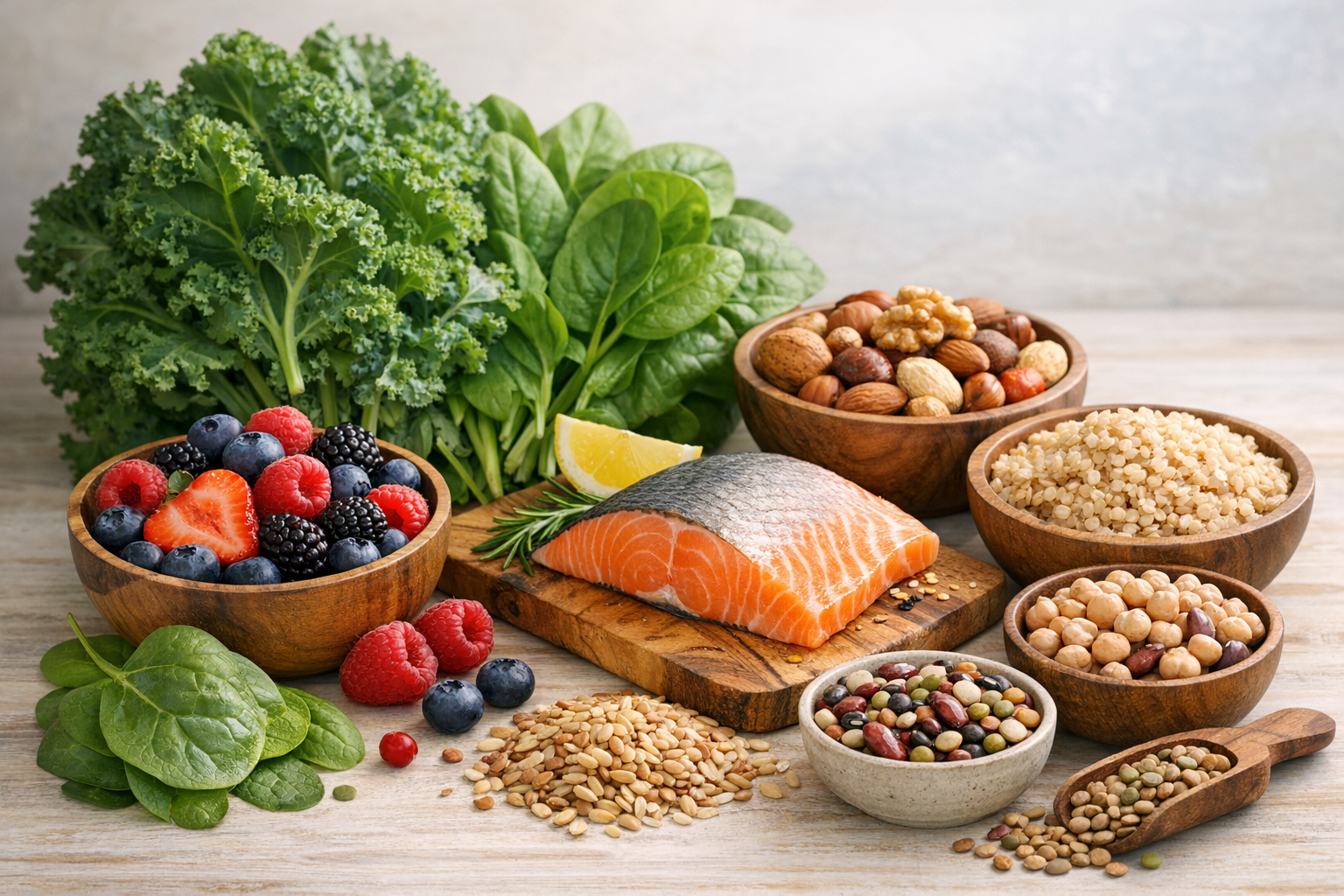
Some research suggests that certain foods may help your body use insulin more effectively. While no single food will dramatically change your A1C, incorporating these regularly may support your overall efforts:
Knowing which foods support healthy blood sugar is one thing. Putting it into practice is another. These meal planning strategies can help you build sustainable habits.
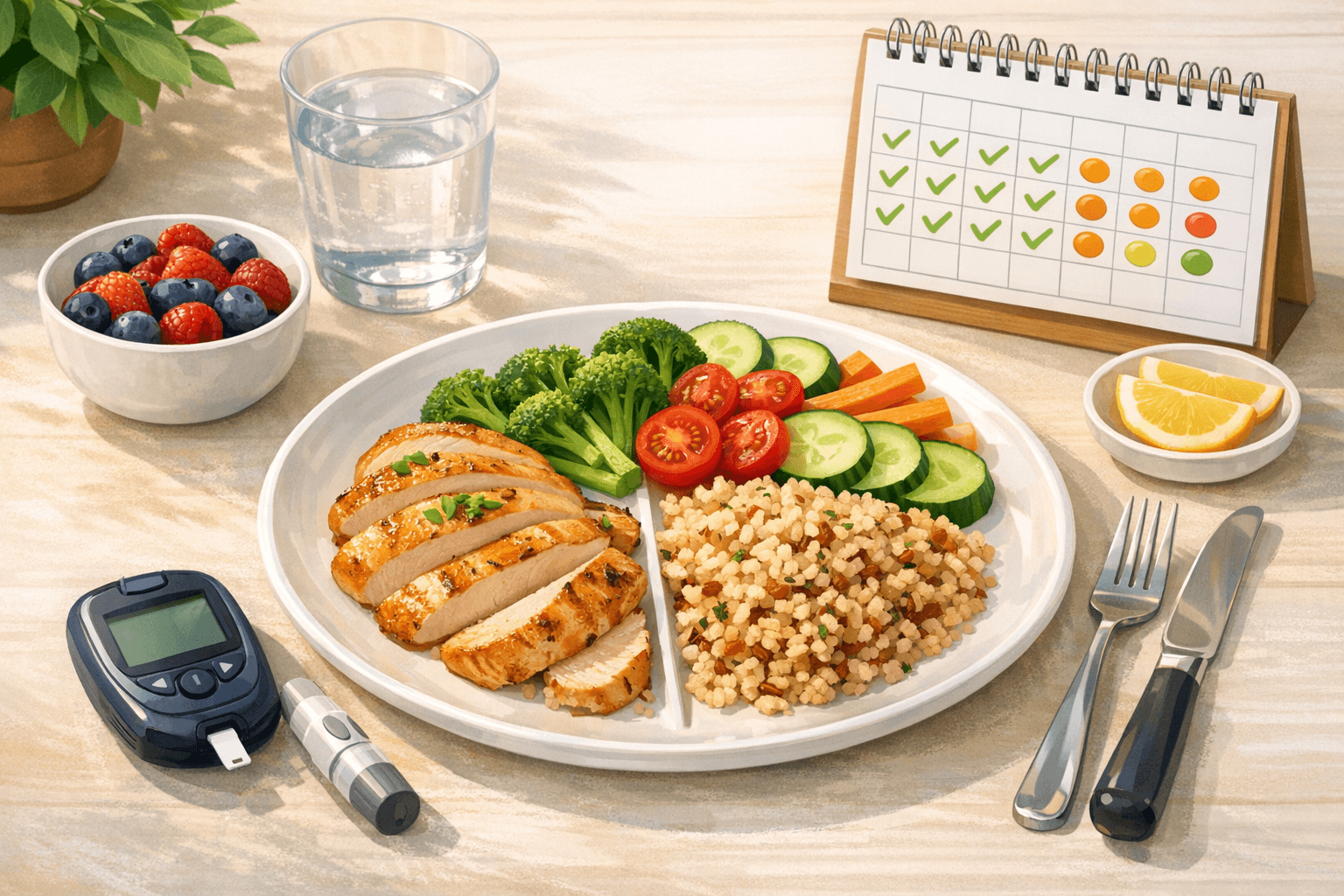
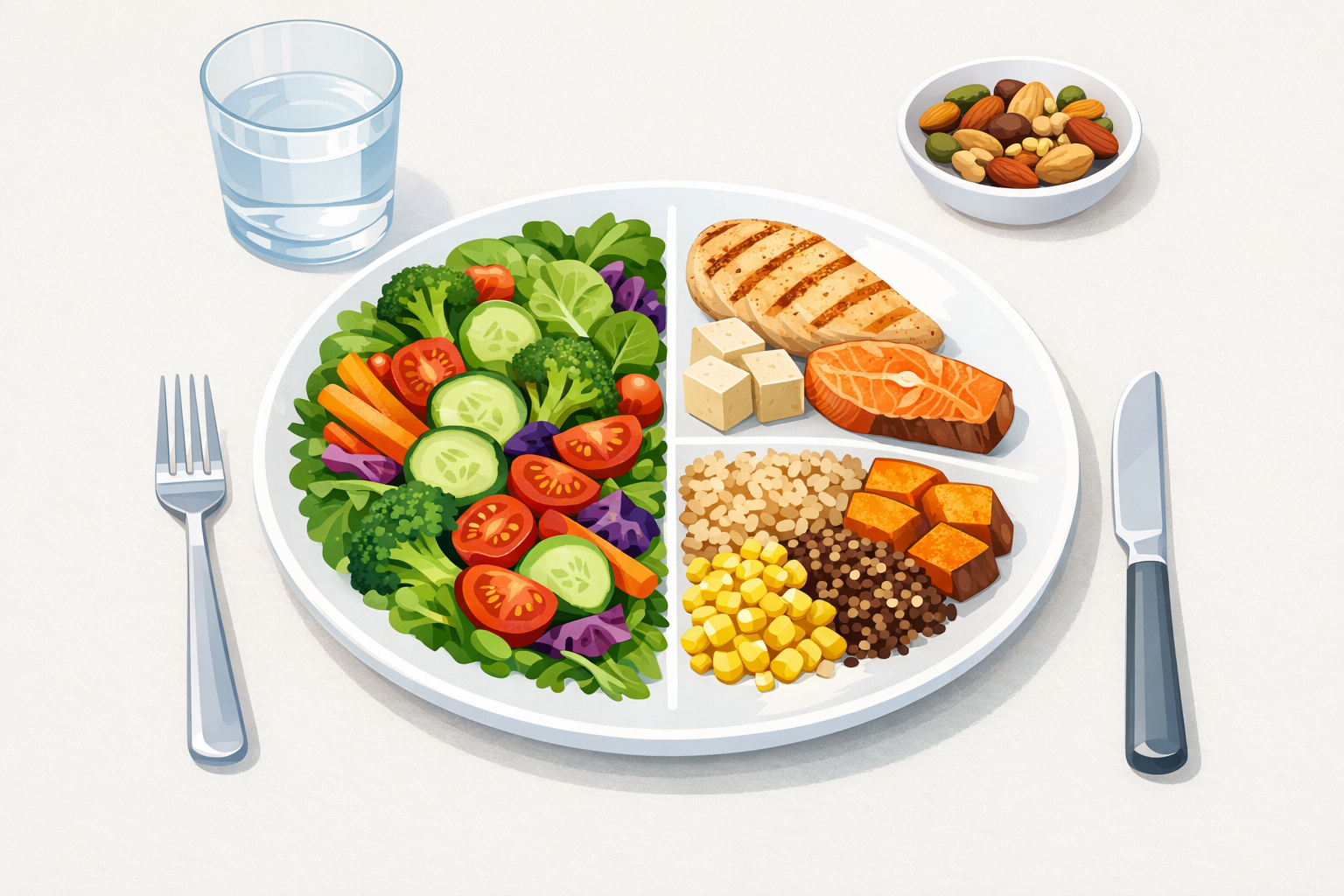
The plate method is a simple visual approach that helps you create balanced meals without needing to count calories or carbohydrates precisely.

To use the plate method:
When you eat can be just as important as what you eat for blood sugar control. Eating at consistent times each day helps your body regulate blood sugar more effectively.
Many people with diabetes find success with:
Managing portions does not mean you have to weigh and measure everything you eat. These simple techniques can help:
Breakfast options:
Lunch options:
Dinner options:
Even with the best intentions, certain habits can undermine your efforts to lower A1C naturally.
Many packaged foods contain added sugars under names you might not recognize. Look for ingredients like dextrose, maltose, cane juice, and rice syrup, which are all forms of added sugar.
Foods that often contain hidden sugars include:
Reading nutrition labels and choosing products with little to no added sugars can make a significant difference.
Skipping meals or eating at irregular times can cause blood sugar fluctuations. When you skip a meal, you may overeat later or experience blood sugar drops followed by spikes. Your body thrives on routine.
What you drink matters as much as what you eat. Beverages are often overlooked sources of sugar and empty calories.
Be mindful of:
Water should be your primary beverage. Unsweetened tea, black coffee, and sparkling water are also good options.
Some people believe skipping meals will help lower blood sugar, but this strategy often backfires. Skipping meals can lead to:
While diet plays a central role in blood sugar management, other lifestyle factors significantly influence your A1C.
Exercise helps your muscles use glucose for energy, which can lower blood sugar during and after activity. Regular physical activity can improve insulin sensitivity for up to 48 hours after exercising.
Aim for:
Start where you are and gradually increase your activity level. Even a 10-minute walk after meals can help reduce blood sugar spikes.
Chronic stress triggers the release of hormones like cortisol and adrenaline, which can raise blood sugar levels. Stress may also lead to emotional eating or disrupted sleep, further affecting glucose control.
Consider incorporating stress-reduction techniques:
Poor sleep affects hormones that regulate hunger and blood sugar. Even one night of inadequate sleep can reduce insulin sensitivity.
For better sleep:
You do not have to navigate blood sugar management alone. Building a supportive healthcare team can improve your outcomes significantly.
A registered dietitian can help you create a personalized eating plan that considers your food preferences, cultural background, schedule, and health goals. Consider seeking professional guidance if:
Diet and medication work together for many people with diabetes. Nutrition should be viewed as a foundation that supports, not replaces, any medications your doctor has prescribed.
Never adjust or stop medications without consulting your healthcare provider. As you make dietary improvements, your medication needs may change, but this should always be done under medical supervision.
While A1C is an important marker, it does not tell the whole story. Other ways to track your progress include:

This is one of the most common questions people ask, and the answer varies by individual. Because A1C reflects your average blood sugar over two to three months, meaningful changes typically take at least three months to show up in your results.
Some people see improvements sooner, while others need more time. Factors that influence how quickly A1C changes include:
Be patient with yourself. Sustainable changes are more valuable than rapid ones that you cannot maintain.
Managing blood sugar through diet is a skill that develops over time. While this guide provides a strong foundation, personalized guidance from a registered dietitian can help you navigate challenges and create a plan tailored to your unique needs.
Nutrista connects you with qualified, registered dietitians who specialize in diabetes nutrition. Unlike generic calorie-tracking apps that rely solely on artificial intelligence, Nutrista empowers real dietitians with modern technology so they can provide you with personalized, evidence-based guidance. You deserve support from a knowledgeable professional who understands that managing blood sugar is about more than just counting carbohydrates.
Always consult your healthcare team before making significant changes to your diet or lifestyle, especially if you are taking medications for diabetes or other conditions.
Lowering your A1C naturally is possible with consistent, sustainable changes. Start with one or two strategies from this guide, build on your progress, and reach out for professional support when you need it. Your health journey is worth the investment.

Stop wasting your Sundays! 😱 Discover why your meal prep keeps failing and how Nutrista AI is fixing the broken $700 billion grocery industry for good. 🥗🔥

Stop chasing payments like a debt collector! 💸 While your clients get fit, your bank account is starving. Discover why 93% of dietitians lose money in January and how to fix it NOW. 🚀

Stop drowning in 'Excel Hell' while your clients panic over Christmas leftovers. Discover how Nutrista AI saves your sanity and scales your practice while you actually relax. 🎄🔥
Professional nutritionists ready to help you