




A1C levels

How to Improve A1C Through Nutrition: Evidence-Based Strategies

Nutrista Team
Share
How to Improve A1C Through Nutrition: Evidence-Based Strategies

How to Improve A1C Through Nutrition: Evidence-Based Strategies

If you have recently received an A1C result that was higher than expected, you may be feeling overwhelmed, frustrated, or unsure of what to do next. You are not alone. Many people living with prediabetes or type 2 diabetes struggle to understand how their daily food choices affect this important number.

The good news is that nutrition plays a powerful role in managing blood sugar over time. Small, consistent changes to what you eat can lead to meaningful improvements in your A1C. This guide will walk you through exactly what A1C means, how it connects to your daily blood sugar, and the evidence-based nutrition strategies that can help you take control of your health.

What Is A1C and Why Does It Matter?

A1C is a blood test that measures your average blood sugar level over the past two to three months. Unlike daily blood sugar readings, which show your glucose level at a single moment, A1C provides a bigger picture of how well your blood sugar has been controlled over time.

Real Dietitians, Real Results

Download on the App StoreGet it on Google Play

The test works by measuring the percentage of hemoglobin molecules in your red blood cells that have glucose attached to them. Since red blood cells live for about three months, the A1C test captures a snapshot of your blood sugar patterns during that entire period.

A1C Chart: What the Numbers Mean

Understanding your A1C number is the first step toward taking action. Here is a general guide to interpreting results:

  • Below 5.7%: Normal, no diabetes
  • 5.7% to 6.4%: Prediabetes, increased risk of developing type 2 diabetes
  • 6.5% or higher: Indicates diabetes
  • 7% or lower: Generally the target for many adults with diabetes
  • 8% or higher: May indicate that blood sugar management needs adjustment

Your healthcare provider may set a personalized A1C goal based on your age, health history, and other factors. Always discuss your individual target with your doctor or a registered dietitian.

Real Dietitians, Real Results

Download on the App StoreGet it on Google Play

Understanding the A1C-Blood Sugar Connection

Many people wonder how their daily blood sugar readings relate to their A1C result. This is where the concept of estimated average glucose, or eAG, becomes helpful.

eAG translates your A1C percentage into the same units used by your glucose meter, making it easier to understand. Here are some common conversions:

  • A1C of 6% equals an eAG of approximately 126 mg/dL
  • A1C of 7% equals an eAG of approximately 154 mg/dL
  • A1C of 8% equals an eAG of approximately 183 mg/dL
  • A1C of 9% equals an eAG of approximately 212 mg/dL

Think of it this way: if your A1C is 8%, your average blood sugar over the past three months has been around 183 mg/dL. Lowering that average to 154 mg/dL would bring your A1C down to 7%.

Real Dietitians, Real Results

Download on the App StoreGet it on Google Play

This connection shows why daily choices matter. Every meal, snack, and beverage either contributes to raising your average blood sugar or helps keep it stable. Over weeks and months, these patterns become your A1C result.

Evidence-Based Nutrition Strategies to Lower A1C

When searching for information on how to lower A1C naturally, you will find many opinions. The strategies below are supported by research and recommended by diabetes educators and registered dietitians.

Choosing Low Glycemic Index and Glycemic Load Foods

The glycemic index, or GI, ranks carbohydrate-containing foods based on how quickly they raise blood sugar. Foods with a low GI (55 or below) cause a slower, more gradual rise, while high-GI foods cause rapid spikes.

Real Dietitians, Real Results

Download on the App StoreGet it on Google Play

However, the glycemic load may be even more useful. Glycemic load considers both the quality of the carbohydrate and the amount you actually eat. This gives you a more realistic picture of how a serving of food will affect your blood sugar.

Low-GI foods include most non-starchy vegetables, whole grains, legumes, nuts, and most fruits. High-GI foods include white bread, sugary cereals, white rice, and sweets.

The Importance of Fiber: Soluble and Insoluble Benefits

If you have wondered, "does fiber lower A1C?" the research suggests it can help significantly. Fiber slows the absorption of sugar into your bloodstream, preventing sharp spikes after meals.

Real Dietitians, Real Results

Download on the App StoreGet it on Google Play

There are two types of fiber, and both offer benefits:

  • Soluble fiber dissolves in water and forms a gel-like substance. It helps lower cholesterol and slows glucose absorption. Good sources include oats, beans, apples, and citrus fruits.
  • Insoluble fiber does not dissolve and adds bulk to your stool. It supports digestive health and helps you feel full. Find it in whole wheat, vegetables, and nuts.

Most adults should aim for 25 to 38 grams of fiber per day. Increase your intake gradually and drink plenty of water to avoid digestive discomfort.

Portion Control and the Diabetes Plate Method

Managing portions is one of the most practical ways to control blood sugar without needing to count calories or grams of carbohydrates precisely.

Real Dietitians, Real Results

Download on the App StoreGet it on Google Play

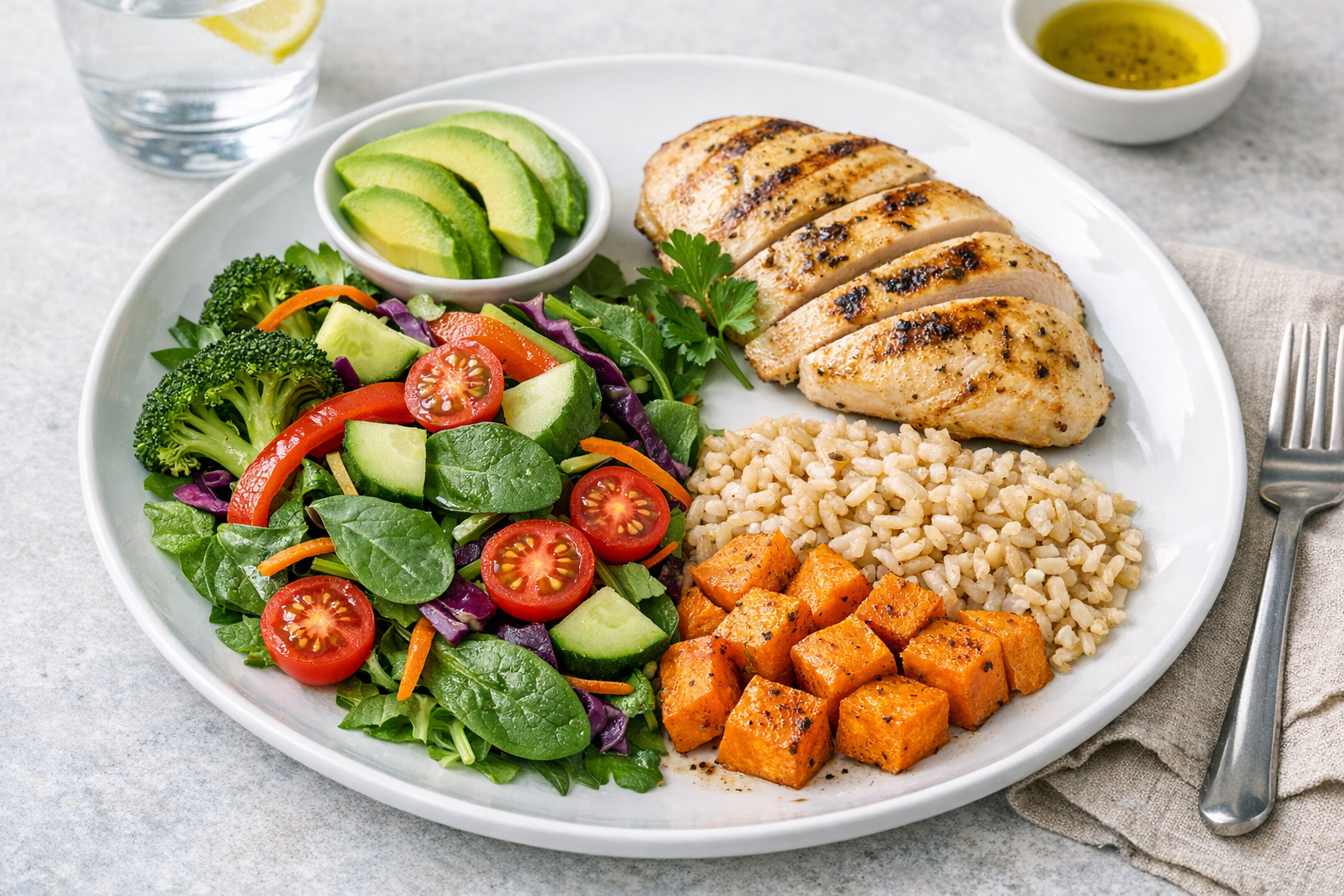
A clear, educational illustration of the diabetes plate method showing a dinner plate divided into sections: half the plate filled with colorful non-starchy vegetables like broccoli, carrots, and leafy greens; one quarter with grilled chicken or fish representing lean protein; one quarter with brown rice or sweet potato representing whole grains. Clean, modern design with a soft color palette.

The diabetes plate method is simple and effective:

  • Fill half your plate with non-starchy vegetables
  • Fill one quarter with lean protein
  • Fill one quarter with whole grains or starchy vegetables
  • Add a small serving of fruit and a glass of water or unsweetened beverage

This method naturally controls portions and balances nutrients without requiring complicated calculations.

Real Dietitians, Real Results

Download on the App StoreGet it on Google Play

Meal Timing and Consistency Throughout the Day

When you eat matters almost as much as what you eat. Skipping meals or eating at irregular times can cause blood sugar fluctuations that make A1C harder to control.

Try to:

  • Eat at roughly the same times each day
  • Avoid going more than 4 to 5 hours without eating during waking hours
  • Include a balanced breakfast within an hour or two of waking
  • Space meals and snacks evenly throughout the day

Consistent timing helps your body regulate insulin more effectively and prevents the highs and lows that contribute to higher average blood sugar.

Real Dietitians, Real Results

Download on the App StoreGet it on Google Play

Reducing Added Sugars and Refined Carbohydrates

One of the most impactful changes you can make is reducing added sugars and refined carbohydrates. These foods cause rapid blood sugar spikes and provide little nutritional value.

Added sugars hide in many processed foods, even ones that seem healthy. Check labels for ingredients like high fructose corn syrup, cane sugar, honey, maple syrup, and words ending in "-ose" such as dextrose or maltose.

Refined carbohydrates have been stripped of their fiber and nutrients. White bread, white pasta, white rice, and most crackers and snack foods fall into this category. Choosing whole grain alternatives provides more fiber and a gentler effect on blood sugar.

Real Dietitians, Real Results

Download on the App StoreGet it on Google Play

The Role of Protein and Healthy Fats in Blood Sugar Stability

Protein and healthy fats are allies in blood sugar management. Including protein and fat with carbohydrates slows digestion and creates a more gradual rise in blood sugar.

Good protein sources include:

  • Chicken, turkey, and lean cuts of beef or pork
  • Fish and seafood
  • Eggs
  • Greek yogurt and cottage cheese
  • Tofu and tempeh
  • Beans and lentils

Healthy fat sources include:

Real Dietitians, Real Results

Download on the App StoreGet it on Google Play
  • Avocados
  • Olive oil and canola oil
  • Nuts and seeds
  • Fatty fish like salmon, mackerel, and sardines

Aim to include a source of protein and a small amount of healthy fat at every meal.

Foods That Help Lower A1C

When looking for foods that lower A1C, focus on nutrient-dense options that support stable blood sugar. Here are specific examples with portion guidance.

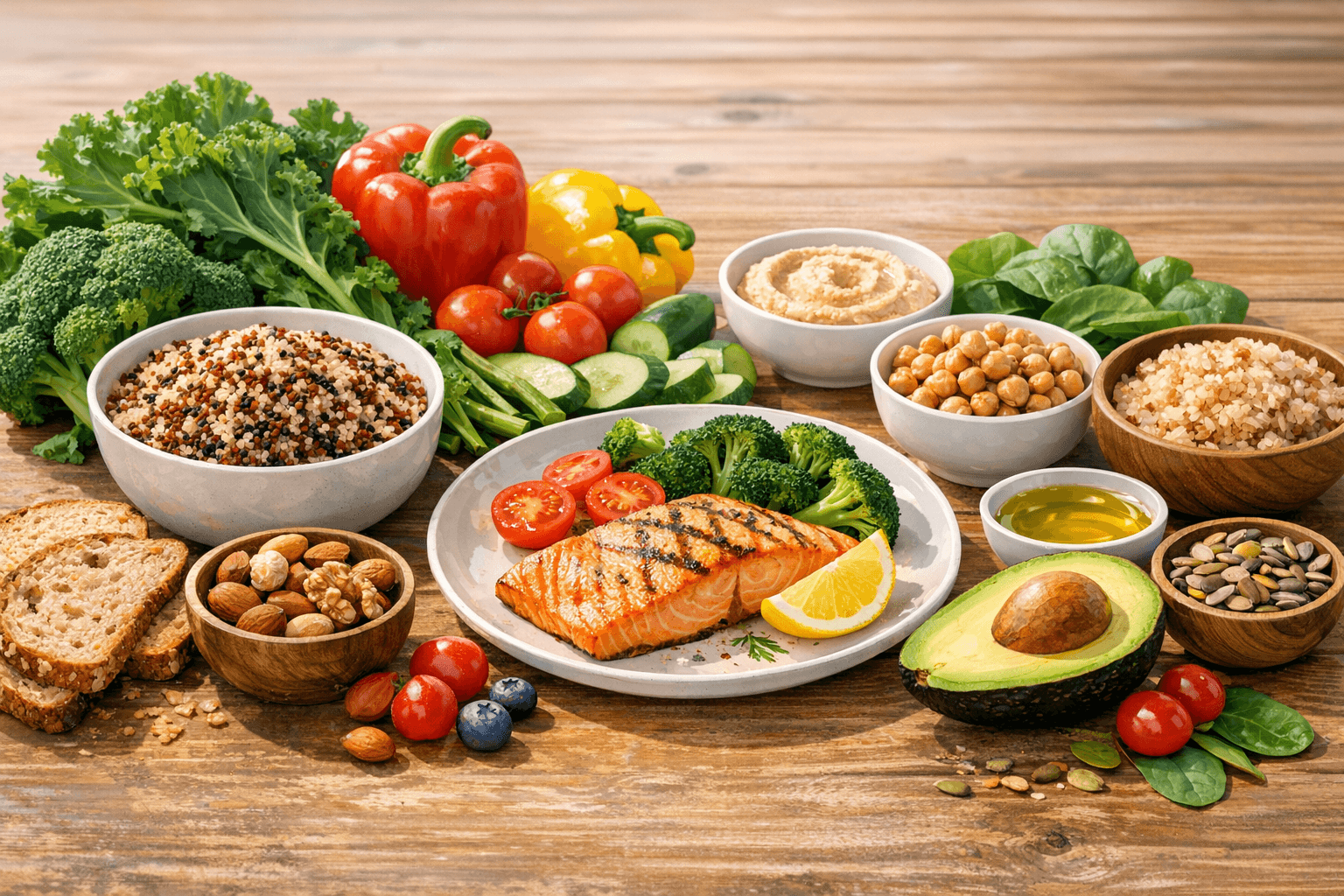
An appetizing overhead view of A1C-friendly foods arranged on a light wooden surface, including a variety of colorful items: leafy green salad with berries and nuts, a small bowl of oatmeal with cinnamon, grilled salmon with roasted vegetables, a handful of almonds, and fresh berries. The arrangement should look appealing and demonstrate that diabetes-friendly eating can be delicious and satisfying.

Real Dietitians, Real Results

Download on the App StoreGet it on Google Play

Non-Starchy Vegetables

These should form the foundation of your meals. They are low in calories and carbohydrates while being rich in fiber, vitamins, and minerals.

  • Leafy greens (spinach, kale, lettuce, Swiss chard)
  • Broccoli and cauliflower
  • Bell peppers
  • Zucchini and summer squash
  • Cucumber and celery
  • Tomatoes
  • Green beans
  • Asparagus
  • Mushrooms

Aim for at least 2 to 3 cups of non-starchy vegetables per day.

Whole Grains vs Refined Grains

Whole grains retain their bran, germ, and endosperm, providing more fiber and nutrients than refined grains.

Real Dietitians, Real Results

Download on the App StoreGet it on Google Play

Better choices include:

  • Brown rice (1/3 to 1/2 cup cooked)
  • Quinoa (1/3 to 1/2 cup cooked)
  • Oatmeal, steel-cut or rolled (1/2 cup cooked)
  • Whole wheat bread (1 slice)
  • Barley (1/3 cup cooked)
  • Farro or bulgur (1/3 cup cooked)

Lean Proteins

Protein helps you feel satisfied and supports muscle maintenance.

  • Skinless chicken breast (3 to 4 ounces)
  • Fish such as salmon, cod, or tilapia (3 to 4 ounces)
  • Lean beef or pork tenderloin (3 ounces)
  • Eggs (1 to 2)
  • Greek yogurt, plain, unsweetened (6 to 8 ounces)
  • Tofu (4 to 6 ounces)

Healthy Fats

Fats are calorie-dense, so portion awareness matters.

Real Dietitians, Real Results

Download on the App StoreGet it on Google Play
  • Avocado (1/4 to 1/2 medium)
  • Olive oil (1 tablespoon)
  • Nuts such as almonds, walnuts, or pistachios (1 ounce, about a small handful)
  • Seeds such as chia, flax, or pumpkin seeds (1 to 2 tablespoons)

Legumes and Beans

Beans are excellent sources of plant protein and fiber, making them particularly helpful for blood sugar control.

  • Black beans, kidney beans, chickpeas (1/2 cup cooked)
  • Lentils (1/2 cup cooked)
  • Split peas (1/2 cup cooked)

Beans have a low glycemic index and can replace higher-GI starches in many meals.

Foods to Limit or Avoid with High A1C

Knowing what to avoid is just as important as knowing what to eat. Here are the main categories to limit.

Real Dietitians, Real Results

Download on the App StoreGet it on Google Play

Sugary Beverages and Juices

Sweetened drinks are among the worst offenders for blood sugar spikes. They provide concentrated sugar in liquid form, which is absorbed rapidly.

Limit or avoid:

  • Regular sodas and soft drinks
  • Sweetened iced teas and lemonades
  • Fruit juices (even 100% juice)
  • Sweetened coffee drinks
  • Energy drinks with added sugar
  • Sports drinks

Choose water, unsweetened tea, or black coffee instead.

Real Dietitians, Real Results

Download on the App StoreGet it on Google Play

White Bread, White Rice, and Refined Flour Products

These foods have a high glycemic index and lack the fiber that helps slow glucose absorption.

Limit:

  • White bread and bagels
  • White pasta
  • White rice
  • Crackers made with refined flour
  • Pastries and baked goods made with white flour

Processed Snacks and Sweets

Packaged snacks often contain hidden sugars, unhealthy fats, and refined carbohydrates.

Real Dietitians, Real Results

Download on the App StoreGet it on Google Play

Limit:

  • Cookies, cakes, and pastries
  • Candy and chocolate bars
  • Chips and snack crackers
  • Granola bars (many are high in sugar)
  • Flavored yogurt with added sugar

Fried Foods and Trans Fats

Fried foods are often high in calories and unhealthy fats, which can worsen insulin resistance.

Limit:

Real Dietitians, Real Results

Download on the App StoreGet it on Google Play
  • French fries and fried potatoes
  • Fried chicken and fish
  • Donuts and fried pastries
  • Foods made with partially hydrogenated oils

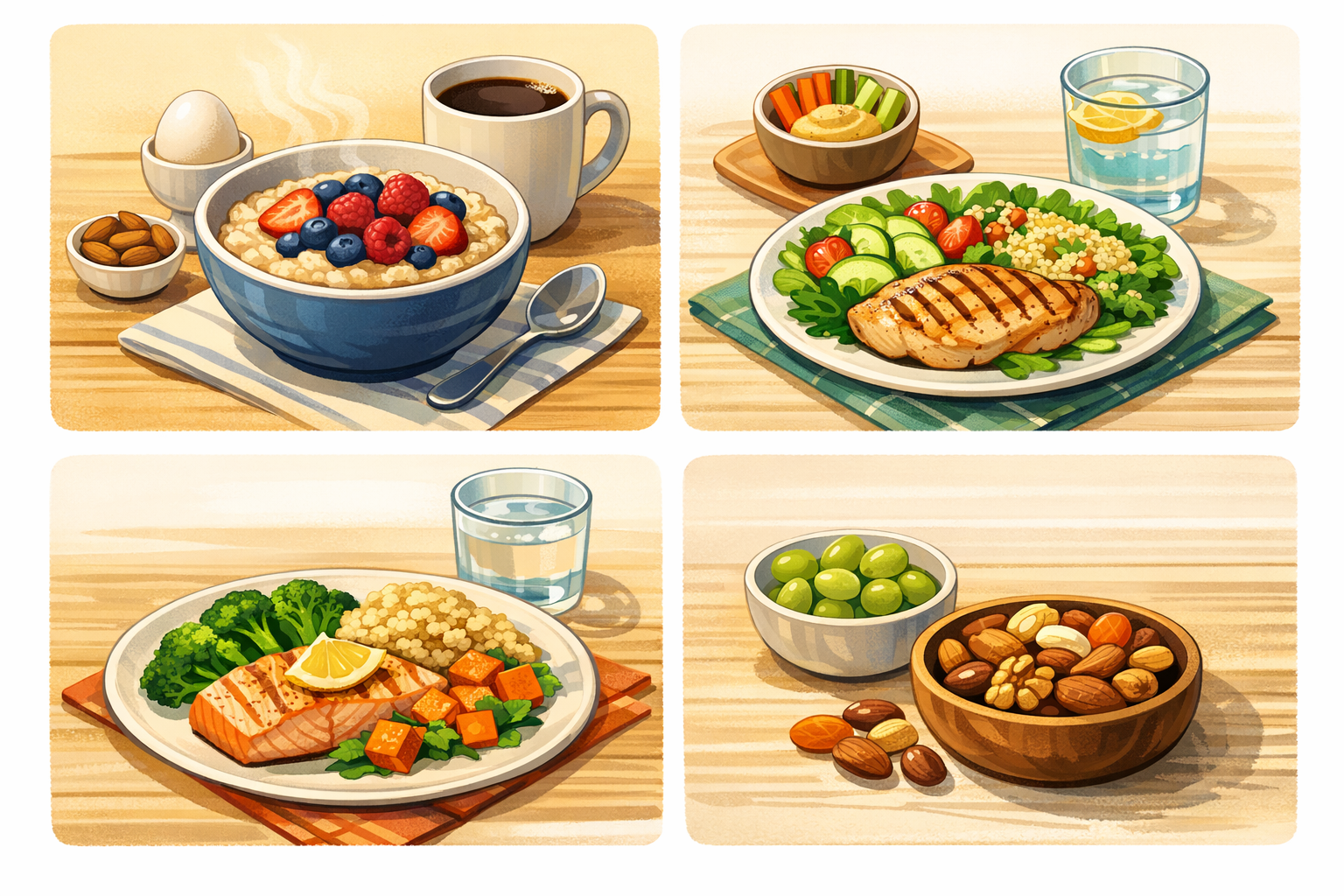
Sample Day of A1C-Friendly Eating

If you have wondered "what should I eat if my A1C is high?" here is a practical example of a full day of balanced, blood sugar-friendly meals.

Breakfast

  • 1/2 cup steel-cut oatmeal cooked with water or unsweetened almond milk
  • 1 tablespoon ground flaxseed stirred in
  • 1/2 cup fresh blueberries
  • 1 tablespoon chopped walnuts
  • 1 hard-boiled egg on the side for extra protein

Lunch

  • Large salad with 2 cups mixed greens, 1/2 cup cucumber slices, and 1/4 cup bell peppers
  • 4 ounces grilled chicken breast
  • 1/4 avocado sliced
  • 1 tablespoon olive oil and lemon juice dressing
  • 1 small whole grain roll or 1/3 cup cooked quinoa on the side

Afternoon Snack

  • 1 small apple with 1 tablespoon almond butter
  • Or: 6 ounces plain Greek yogurt with 1 tablespoon chia seeds

Dinner

  • 4 to 5 ounces baked salmon
  • 1 cup roasted non-starchy vegetables (broccoli, zucchini, bell peppers)
  • 1/2 cup cooked brown rice or sweet potato (1/2 cup mashed)
  • Salad with 1 tablespoon olive oil dressing

Evening Snack (optional)

  • 1 ounce raw almonds or a small handful of mixed nuts

This sample day provides a balance of fiber, protein, and healthy fats while keeping portions of carbohydrates moderate and consistent.

How Long Does It Take to Lower A1C?

A common question is "how long does it take to lower A1C?" The answer depends on several factors, but here is what you can generally expect.

Real Dietitians, Real Results

Download on the App StoreGet it on Google Play

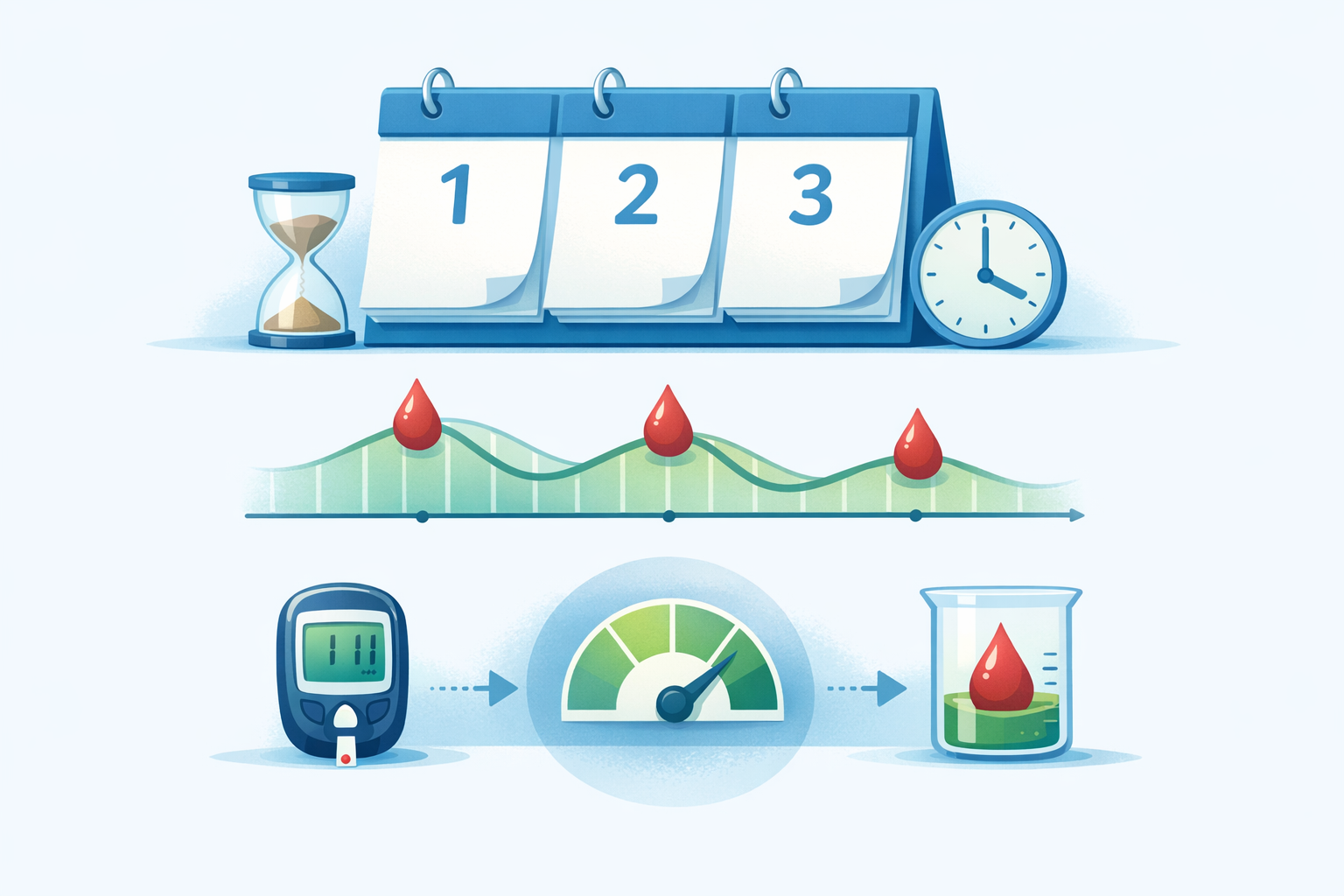
Because A1C reflects blood sugar over two to three months, meaningful changes typically take at least that long to appear in your results.

However, the changes you make today start affecting your blood sugar immediately. Daily readings may improve within days to weeks of dietary changes. The A1C test simply needs time to catch up.

Factors that influence how quickly you see results include:

Real Dietitians, Real Results

Download on the App StoreGet it on Google Play
  • Your starting A1C level
  • How significantly you change your eating habits
  • Whether you are also increasing physical activity
  • Your medication regimen and whether it is adjusted
  • Individual factors like metabolism and genetics

Most people can expect to see noticeable A1C improvements within three to six months of consistent dietary changes. Some may see changes sooner, while others may need more time.

Beyond Diet: Other Factors That Affect A1C

While nutrition is foundational, other lifestyle factors play important roles in blood sugar management.

Physical Activity

Exercise helps your body use insulin more efficiently and lowers blood sugar. Aim for at least 150 minutes of moderate activity per week, such as brisk walking, swimming, or cycling.

Real Dietitians, Real Results

Download on the App StoreGet it on Google Play

Even small amounts of movement after meals, such as a 10 to 15 minute walk, can help blunt post-meal blood sugar spikes.

Sleep

Poor sleep can disrupt hormones that regulate blood sugar and increase insulin resistance. Most adults need 7 to 9 hours of quality sleep per night.

Stress Management

Chronic stress raises cortisol levels, which can increase blood sugar. Finding healthy ways to manage stress, such as meditation, deep breathing, or enjoyable hobbies, supports better blood sugar control.

Real Dietitians, Real Results

Download on the App StoreGet it on Google Play

Medication Adherence

If you have been prescribed medication for diabetes or prediabetes, taking it as directed is essential. Nutrition supports medication effectiveness but does not replace it.

When to Seek Professional Help

While general guidance is helpful, personalized support from a registered dietitian or certified diabetes educator can make a significant difference in your results.

Consider seeking professional guidance if:

Real Dietitians, Real Results

Download on the App StoreGet it on Google Play
  • Your A1C is not improving despite your best efforts
  • You are unsure how to plan balanced meals
  • You have other health conditions that complicate nutrition choices
  • You experience frequent low or high blood sugar episodes
  • You need help adjusting eating habits around your medication schedule

A registered dietitian can create a personalized eating plan that fits your lifestyle, preferences, and health goals.

Take the Next Step Toward Better Blood Sugar Control

Improving your A1C through nutrition is absolutely possible. The strategies in this guide, choosing lower glycemic foods, increasing fiber, managing portions, timing meals consistently, and reducing added sugars, are all backed by evidence and have helped many people take control of their blood sugar.

Remember that small, consistent changes add up over time. You do not need to overhaul your entire diet overnight. Start with one or two changes, build momentum, and celebrate your progress along the way.

Real Dietitians, Real Results

Download on the App StoreGet it on Google Play

If you want personalized support from a qualified professional, consider working with a registered dietitian. Nutrista empowers real, local, registered dietitians with artificial intelligence so they can help clients with the most modern technologies. Unlike generic calorie-tracking apps that only offer AI-generated advice, Nutrista is the first platform that connects users with a large community of international, registered, vetted dietitians supported by AI. This means you get the convenience of modern technology combined with the expertise and accountability of a real person who understands your unique needs.

Always consult your healthcare provider before making significant changes to your diet, especially if you are taking medications for diabetes or other conditions. Your doctor, endocrinologist, or a registered dietitian can help you create a safe, effective plan tailored to your health history and goals.

Real Dietitians, Real Results

Download on the App StoreGet it on Google Play
#A1C levels#diabetes management#blood sugar control

Others Viewed