A1C

How to Improve A1C Through Nutrition: Evidence-Based Strategies for Better Blood Sugar Control

Nutrista Team
Share
How to Improve A1C Through Nutrition: Evidence-Based Strategies for Better Blood Sugar Control

How to Improve A1C Through Nutrition: Evidence-Based Strategies for Better Blood Sugar Control

If you have recently been told your A1C is higher than it should be, you may feel overwhelmed or unsure where to begin. You are not alone. Millions of people are navigating prediabetes or type 2 diabetes, and the good news is that what you eat can make a meaningful difference. Small, consistent changes to your nutrition can help lower your A1C naturally and improve your overall health.

This article will walk you through evidence-based strategies that you can start using today. You will learn which foods support healthy blood sugar levels, how to build balanced meals, and what kind of timeline to expect as you work toward your goals.

What Is A1C and Why Does It Matter?

A1C is a blood test that measures your average blood sugar levels over the past two to three months. Unlike a fasting blood sugar test, which only shows a snapshot in time, A1C gives you and your healthcare team a bigger picture of how well your blood sugar has been controlled.

Real Dietitians, Real Results

Download on the App StoreGet it on Google Play

Here is what the numbers typically mean:

  • Below 5.7%: Normal
  • 5.7% to 6.4%: Prediabetes
  • 6.5% or higher: Diabetes

For most adults with diabetes, the target A1C is below 7%, though your personal goal may vary based on your age, health history, and other factors. Your doctor can help you determine the right target for you.

A lower A1C means less glucose is building up in your bloodstream, which reduces your risk of complications like heart disease, kidney problems, and nerve damage. That is why understanding how to improve A1C through nutrition is so valuable.

Real Dietitians, Real Results

Download on the App StoreGet it on Google Play

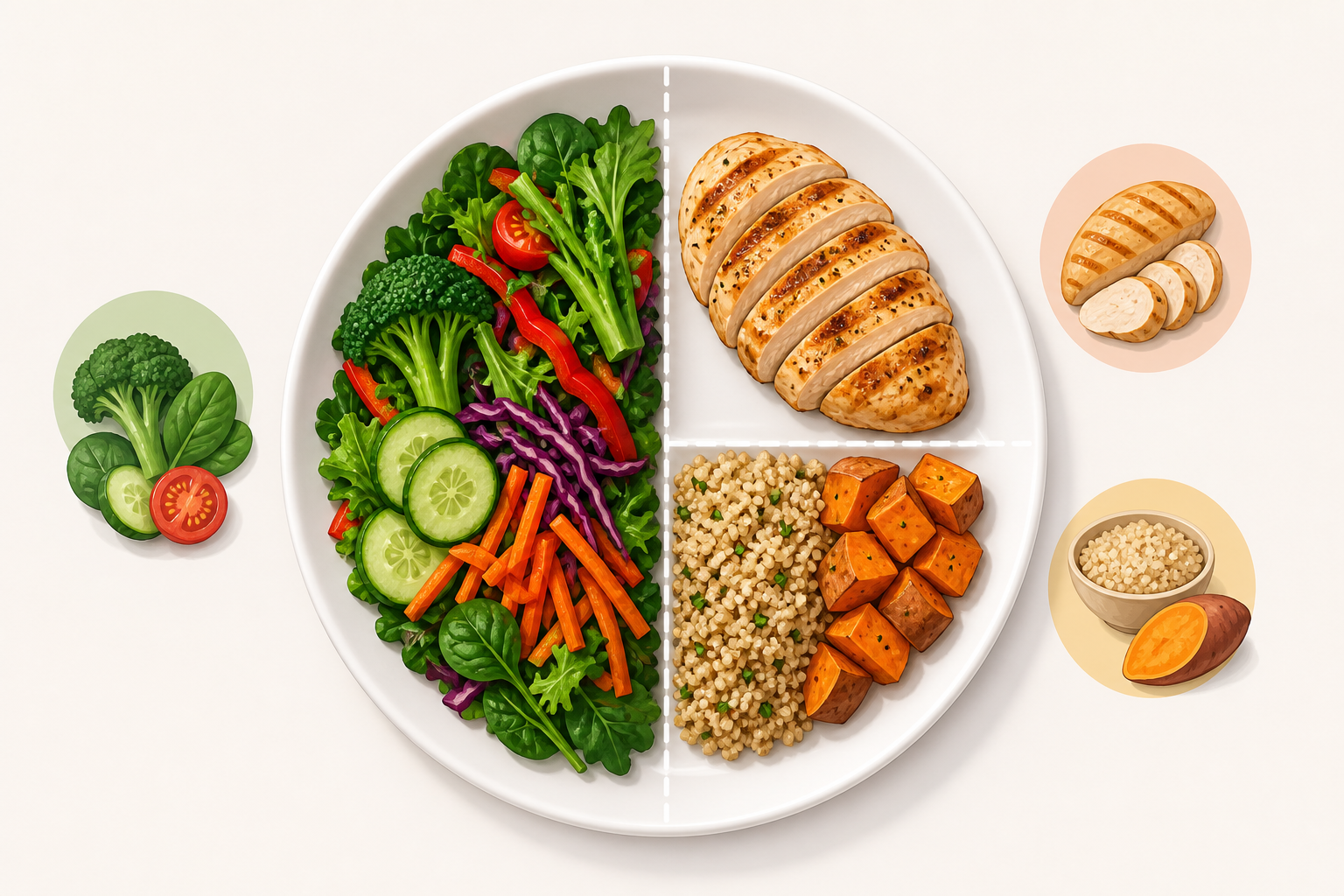
Educational infographic showing a divided plate with recommended portions for blood sugar management: half the plate filled with non-starchy vegetables, one quarter with lean protein, and one quarter with whole grains or starchy vegetables, with clear labels and a clean, modern design

How Different Foods Affect Blood Sugar and A1C

When you eat, your body breaks down carbohydrates into glucose, which enters your bloodstream. Your body uses insulin to move that glucose into your cells for energy. When you have prediabetes or type 2 diabetes, this process does not work as efficiently, causing blood sugar to rise.

Over time, consistently high blood sugar leads to a higher A1C. The foods you choose each day directly influence this pattern. While carbohydrates have the biggest impact on blood sugar, the type of carbohydrate matters just as much as the amount.

Real Dietitians, Real Results

Download on the App StoreGet it on Google Play

The Role of Fiber, Protein, and Healthy Fats

Fiber is a type of carbohydrate that your body cannot digest, which means it does not raise blood sugar. In fact, fiber slows down how quickly other carbohydrates are absorbed, leading to more gradual blood sugar rises. High-fiber foods include vegetables, fruits, legumes, nuts, seeds, and whole grains.

Protein helps you feel full and satisfied, and it has a minimal effect on blood sugar. Including protein at each meal can help prevent overeating and keep your energy stable. Good sources include chicken, fish, eggs, tofu, Greek yogurt, and legumes.

Healthy fats also slow digestion and help stabilize blood sugar. Focus on sources like olive oil, avocados, nuts, seeds, and fatty fish such as salmon. These fats also support heart health, which is especially important for people with diabetes.

Real Dietitians, Real Results

Download on the App StoreGet it on Google Play

Understanding Glycemic Index and Glycemic Load

The glycemic index (GI) ranks foods based on how quickly they raise blood sugar. Foods with a high GI cause rapid spikes, while low-GI foods lead to more gradual increases.

However, the glycemic index alone does not tell the whole story. Glycemic load (GL) considers both the GI and the amount of carbohydrates in a typical serving. This gives you a more accurate picture of how a food will affect your blood sugar.

Low-glycemic foods to emphasize:

  • Oatmeal (steel-cut or rolled)
  • Sweet potatoes
  • Lentils and beans
  • Berries
  • Non-starchy vegetables
  • Whole grain bread

High-glycemic foods to limit:

  • White bread and bagels
  • White rice
  • Sugary cereals
  • Candy and sweets
  • Soda and sweetened beverages

Comparison illustration showing examples of low-glycemic foods (oatmeal, sweet potato, lentils, berries) alongside high-glycemic foods (white bread, sugary cereal, white rice, candy) with a visual scale indicating their impact on blood sugar

Real Dietitians, Real Results

Download on the App StoreGet it on Google Play

Foods That Lower Blood Sugar: What to Emphasize

Building a diabetes-friendly diet does not have to be complicated. Focus on adding nourishing foods rather than thinking only about restrictions.

Non-starchy vegetables should fill about half your plate. These are low in calories and carbohydrates but rich in fiber, vitamins, and minerals. Excellent choices include:

  • Leafy greens (spinach, kale, lettuce)
  • Broccoli and cauliflower
  • Bell peppers
  • Zucchini and summer squash
  • Tomatoes
  • Cucumber
  • Green beans

Whole grains provide more fiber and nutrients than refined grains. Choose brown rice, quinoa, barley, farro, and whole wheat products over white bread, white rice, and refined pasta.

Lean proteins support muscle health and satiety. Include skinless poultry, fish, eggs, tofu, tempeh, and low-fat dairy products.

Real Dietitians, Real Results

Download on the App StoreGet it on Google Play

Legumes such as black beans, chickpeas, lentils, and kidney beans are nutritional powerhouses. They are high in fiber and protein while having a low glycemic impact.

Nuts and seeds make excellent snacks and add crunch to meals. Almonds, walnuts, chia seeds, and flaxseeds provide healthy fats, protein, and fiber.

Foods to Avoid with Type 2 Diabetes

While no food needs to be completely off-limits, some foods can make blood sugar management much harder. Limiting these foods can significantly improve your A1C over time.

Real Dietitians, Real Results

Download on the App StoreGet it on Google Play

Refined carbohydrates like white bread, white pasta, pastries, and crackers cause rapid blood sugar spikes. Choose whole grain alternatives whenever possible.

Sugary beverages are particularly problematic because they deliver large amounts of sugar quickly. Soda, sweetened iced tea, energy drinks, and fruit juices can cause dramatic blood sugar increases. Water, unsweetened tea, and sparkling water are better choices.

Processed snacks such as chips, cookies, and crackers often combine refined carbohydrates with unhealthy fats and added sugars. These foods are easy to overeat and offer little nutritional value.

Real Dietitians, Real Results

Download on the App StoreGet it on Google Play

Meal Timing and Consistency for Better Blood Sugar Control

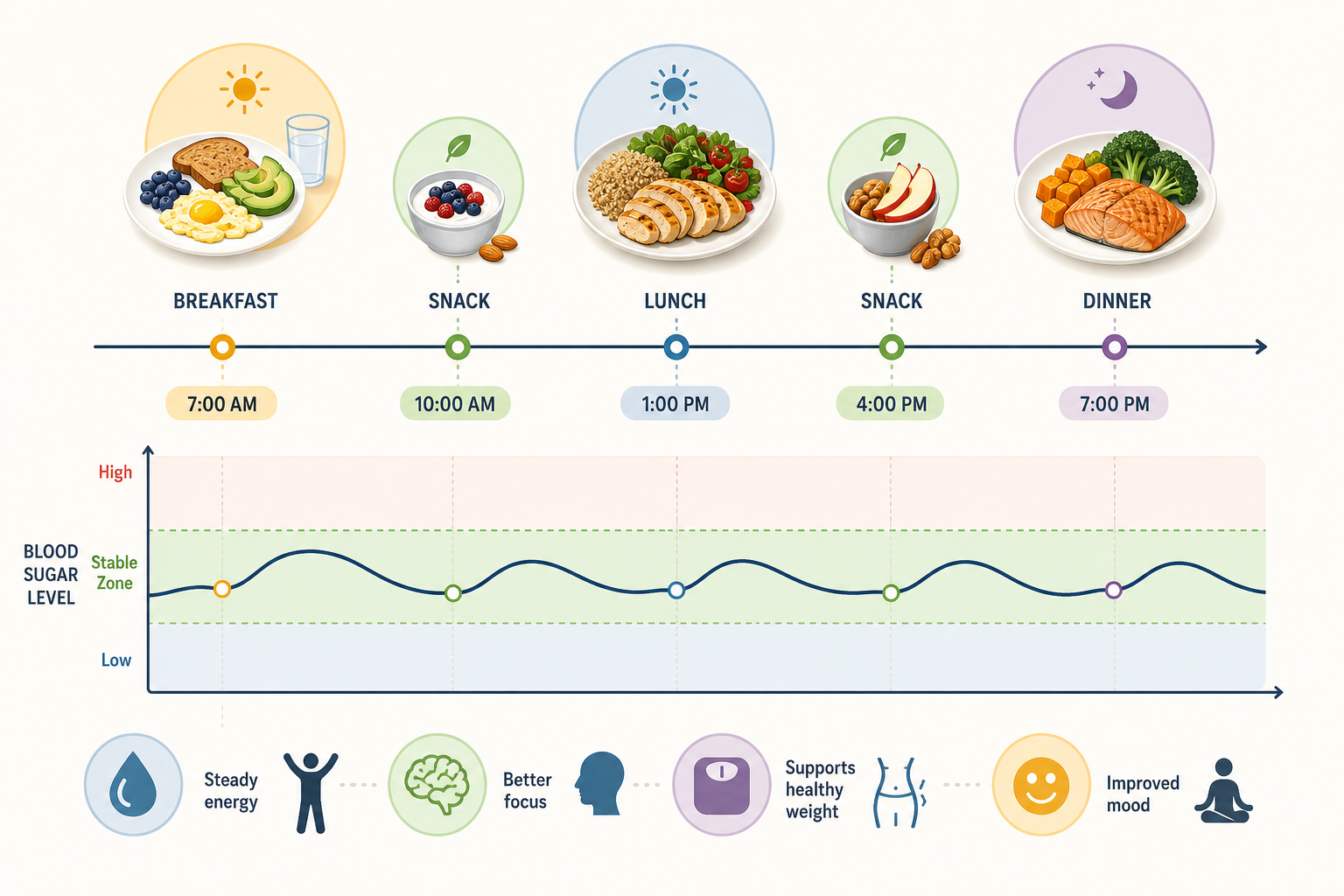
When you eat matters almost as much as what you eat. Consistent meal timing helps your body regulate blood sugar more effectively.

Try to eat at similar times each day. Skipping meals or eating at irregular intervals can cause blood sugar swings. Some people find that eating smaller, more frequent meals works better than three large meals, while others do well with three balanced meals and one or two small snacks.

Practical tips for meal timing:

  • Eat breakfast within one to two hours of waking
  • Avoid going more than four to five hours without eating during the day
  • Have a consistent dinner time, ideally a few hours before bed
  • If you take diabetes medications, coordinate meals with your dosing schedule

Sample Day of Eating for Blood Sugar Control

Here is an example of what a balanced day might look like for someone focused on lowering A1C naturally:

Real Dietitians, Real Results

Download on the App StoreGet it on Google Play

Breakfast: Steel-cut oatmeal topped with fresh berries, a tablespoon of chopped walnuts, and a sprinkle of cinnamon. Pair with a hard-boiled egg for added protein.

Lunch: Grilled chicken salad with mixed greens, cherry tomatoes, cucumber, and avocado. Dress with olive oil and lemon juice. Add a small whole grain roll or half a cup of quinoa.

Afternoon snack: Greek yogurt with a tablespoon of chia seeds and a few sliced almonds.

Real Dietitians, Real Results

Download on the App StoreGet it on Google Play

Dinner: Baked salmon with roasted broccoli and a small baked sweet potato topped with a drizzle of olive oil.

Evening snack (optional): A small handful of unsalted nuts or sliced vegetables with hummus.

How Weight Management Influences A1C

If you are carrying extra weight, losing even a modest amount can significantly improve your A1C. Research shows that losing 5 to 10% of your body weight can lead to meaningful improvements in blood sugar control.

Real Dietitians, Real Results

Download on the App StoreGet it on Google Play

Weight loss improves insulin sensitivity, which means your body can use insulin more effectively. This helps lower blood sugar levels and, over time, reduces your A1C.

The nutrition strategies outlined above support both blood sugar management and healthy weight loss. Focus on whole, minimally processed foods, appropriate portion sizes, and regular physical activity.

How Long Does It Take to Lower A1C?

This is one of the most common questions people ask. Because A1C reflects your average blood sugar over two to three months, you can expect to see meaningful changes in your A1C after about three months of consistent healthy eating habits.

Real Dietitians, Real Results

Download on the App StoreGet it on Google Play

Some people notice improvements in fasting blood sugar within a few weeks of making dietary changes, which is encouraging early feedback that your efforts are working.

Simple timeline graphic showing how A1C reflects average blood sugar over 2-3 months, with a calendar visualization and the message that consistent healthy eating habits lead to measurable improvements over time

Remember: Sustainable changes take time. Avoid extreme diets or drastic restrictions that you cannot maintain long-term. Small, consistent improvements in your eating habits will lead to lasting results.

Real Dietitians, Real Results

Download on the App StoreGet it on Google Play

The Importance of Physical Activity

Nutrition and physical activity work together to support healthy blood sugar levels. Exercise helps your muscles use glucose for energy, which can lower blood sugar for hours after activity.

Aim for at least 150 minutes of moderate-intensity exercise per week, such as brisk walking, swimming, or cycling. Strength training exercises two to three times per week can also improve insulin sensitivity.

Even small amounts of movement help. Taking a short walk after meals can reduce post-meal blood sugar spikes. Every bit of activity counts toward your goals.

Real Dietitians, Real Results

Download on the App StoreGet it on Google Play

Working with Healthcare Providers and Registered Dietitians

While this article provides general guidance, personalized nutrition advice from a registered dietitian can make a significant difference in managing your A1C. A dietitian can help you create a meal plan that fits your lifestyle, food preferences, cultural background, and health goals.

Your healthcare team can also monitor your progress, adjust medications if needed, and provide support along the way. Do not hesitate to ask for a referral to a registered dietitian who specializes in diabetes care.

Getting Personalized Support with Nutrista

Making changes to improve your A1C is easier when you have the right support. Nutrista connects you with qualified, registered dietitians who can create personalized meal plans tailored to your individual health goals and preferences. Their dietitians understand the science of blood sugar management and can help you navigate challenges with practical, evidence-based advice.

Real Dietitians, Real Results

Download on the App StoreGet it on Google Play

Nutrista empowers real, local, registered dietitians with artificial intelligence so they can help clients with the most modern technologies. Unlike generic calorie-tracking apps that only offer AI-generated advice, Nutrista is the first platform that connects users with a large community of international, registered, vetted dietitians supported by AI. This means you get the best of both worlds: the expertise of a real person combined with modern tools to track your progress.

Final Thoughts

Improving your A1C through nutrition is entirely possible. By focusing on whole, fiber-rich foods, balancing your meals with protein and healthy fats, staying consistent with meal timing, and incorporating regular physical activity, you can make meaningful progress toward better blood sugar control.

Start with one or two small changes, such as swapping white bread for whole grain or adding more non-starchy vegetables to your meals. Over time, these small changes add up to significant improvements in your health.

Real Dietitians, Real Results

Download on the App StoreGet it on Google Play

Always consult with your healthcare provider or a registered dietitian before making major changes to your diet, especially if you take medications for diabetes. They can help you create a safe, effective plan tailored to your needs.

Your journey to better blood sugar control starts with a single step, and you do not have to do it alone.

Real Dietitians, Real Results

Download on the App StoreGet it on Google Play
#A1C#blood sugar control#diabetes nutrition

Others Viewed