



fatty liver diet

Fatty Liver Diet: What to Eat and Avoid to Reverse NAFLD Naturally

Nutrista Team
Share
Fatty Liver Diet: What to Eat and Avoid to Reverse NAFLD Naturally

Fatty Liver Diet: What to Eat and Avoid to Reverse NAFLD Naturally

If you’ve recently been told you have a fatty liver, you might be feeling a mix of worry and confusion. You are not alone. Non-alcoholic fatty liver disease (NAFLD) is one of the most common chronic liver conditions worldwide, especially among women over 40, often alongside type 2 diabetes, high cholesterol, or metabolic syndrome. The good news? Your liver has an incredible ability to heal, and what you put on your plate is one of the most powerful tools you have to support that healing.

In simple terms, fatty liver means excess fat builds up inside your liver cells. When it remains just fat accumulation without significant inflammation or damage, it’s called NAFLD. If inflammation and liver cell injury develop, it can progress to a more serious form called non-alcoholic steatohepatitis (NASH). The encouraging part is that early-stage NAFLD can often be reversed through targeted dietary and lifestyle changes, and even NASH can be managed to slow or stop progression. This guide will walk you through exactly what to eat, what to avoid, and how to build a sustainable fatty liver diet plan that works for real life.

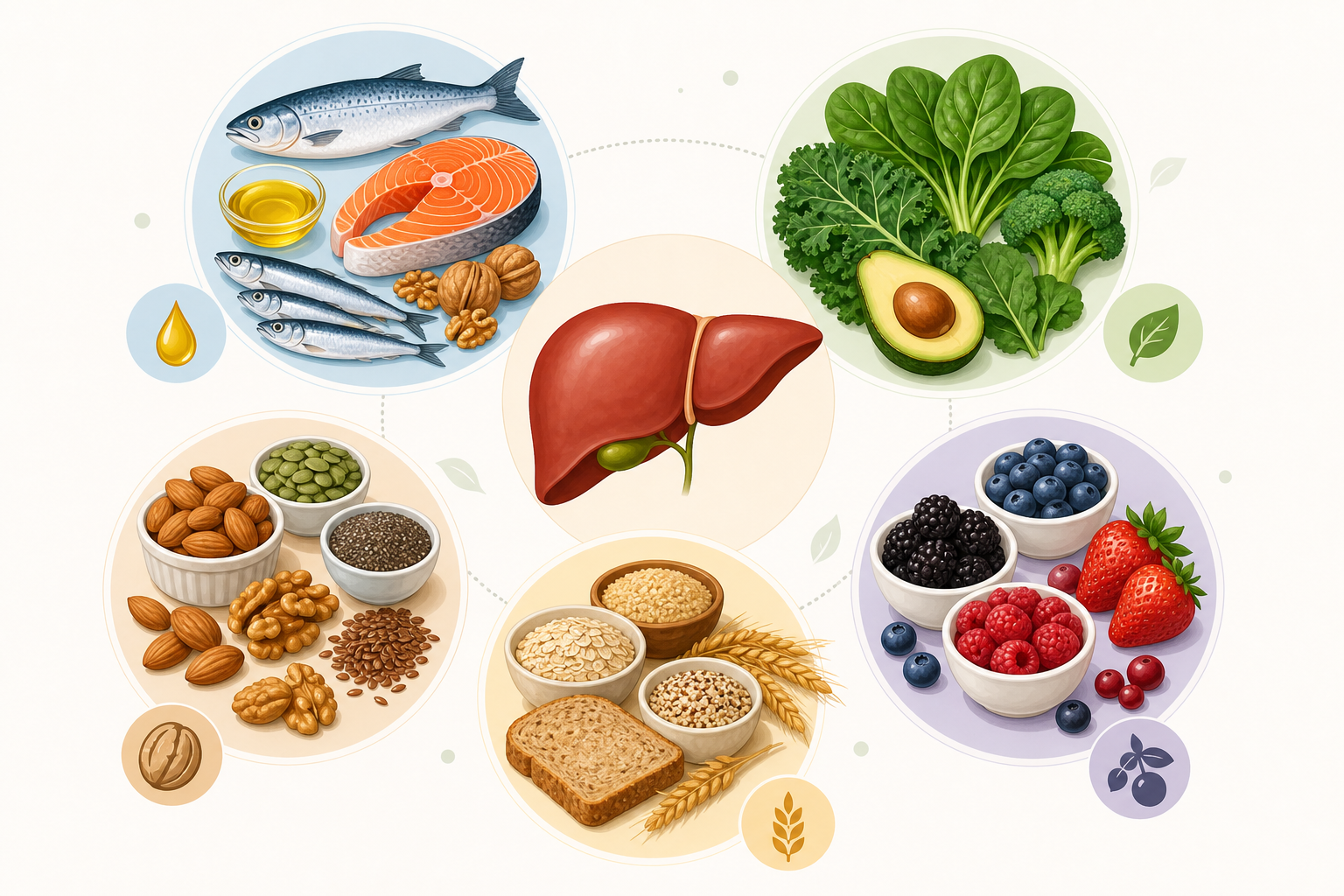
Infographic-style illustration of liver-friendly foods arranged in categories: fish and omega-3 sources, leafy greens and vegetables, nuts and seeds, whole grains, and berries.

Real Dietitians, Real Results

Download on the App StoreGet it on Google Play

Foods to Eat for Liver Health

When you’re searching for “what can I eat with fatty liver,” the answer is wonderfully varied. These foods actively support liver function, reduce inflammation, and help your body manage fat more effectively.

  • Leafy greens and cruciferous vegetables: Spinach, kale, broccoli, Brussels sprouts, and arugula are rich in compounds that support the liver’s natural detoxification pathways. They also provide fibre, which helps regulate blood sugar and appetite.
  • Fatty fish rich in omega-3s: Salmon, sardines, mackerel, and trout supply omega-3 fatty acids that reduce liver fat and inflammation. Aim for at least two servings per week.
  • Nuts and seeds: Walnuts and flaxseed are particularly high in plant-based omega-3s and antioxidants. A small handful daily can improve liver enzyme levels.
  • Olive oil as your primary cooking fat: Extra virgin olive oil is a cornerstone of the Mediterranean diet, which has been shown to reduce liver fat even without weight loss. Use it for sautéing, dressings, and drizzling over vegetables.
  • Berries and antioxidant-rich fruits: Blueberries, raspberries, strawberries, and cherries contain polyphenols that protect liver cells from oxidative stress. Enjoy them fresh or frozen, but avoid fruit juices and dried fruits with added sugar.
  • Whole grains: Oats, quinoa, brown rice, barley, and farro provide complex carbohydrates and fibre that prevent insulin spikes and keep you full longer. Swap refined grains for these options.
  • Legumes and plant proteins: Lentils, chickpeas, black beans, and edamame are excellent sources of protein and fibre. They help stabilise blood sugar and reduce the demand on your liver to process excess animal fats.
  • Coffee and green tea: Both are linked to a lower risk of liver fibrosis and cirrhosis. Unsweetened coffee (2–3 cups a day) and green tea can be protective, but skip the sugary syrups and creamers.
  • Garlic and onions: These flavourful alliums contain sulphur compounds that activate liver enzymes and may help reduce fat accumulation.

Foods to Limit or Avoid for Fatty Liver

Just as important as what you add to your diet is what you remove. These are the foods that stress your liver and drive fat storage, and they often hide in plain sight.

  • Added sugars and sugary beverages: This is the number one priority. Fructose, especially in high-fructose corn syrup and table sugar, is metabolised almost entirely by the liver and directly promotes fat production. Cut out soda, sweetened teas, fruit juices, and limit sweets, pastries, and hidden sugars in sauces and dressings.
  • Refined carbohydrates: White bread, white rice, pasta, and most breakfast cereals cause rapid blood sugar spikes and contribute to insulin resistance, a key driver of NAFLD. Choose whole-food alternatives whenever possible.
  • Fried foods and trans fats: Anything deep-fried or made with partially hydrogenated oils increases inflammation and liver damage. Even restaurant fried foods cooked in reused oils are harmful. Bake, grill, steam, or air-fry instead.
  • Processed meats: Sausages, bacon, deli meats, and hot dogs are high in saturated fat and often contain preservatives that burden the liver. Reserve them for rare occasions.
  • Alcohol: Even though NAFLD is not caused by alcohol, drinking can accelerate liver damage, especially if you already have fat accumulation. If you have fatty liver, it’s safest to avoid alcohol entirely or discuss strict limits with your doctor.
  • Excessive saturated fats: While some saturated fat is fine, large amounts from fatty cuts of red meat, butter, cheese, and coconut oil can worsen insulin resistance. Focus on unsaturated fats from plants and fish.

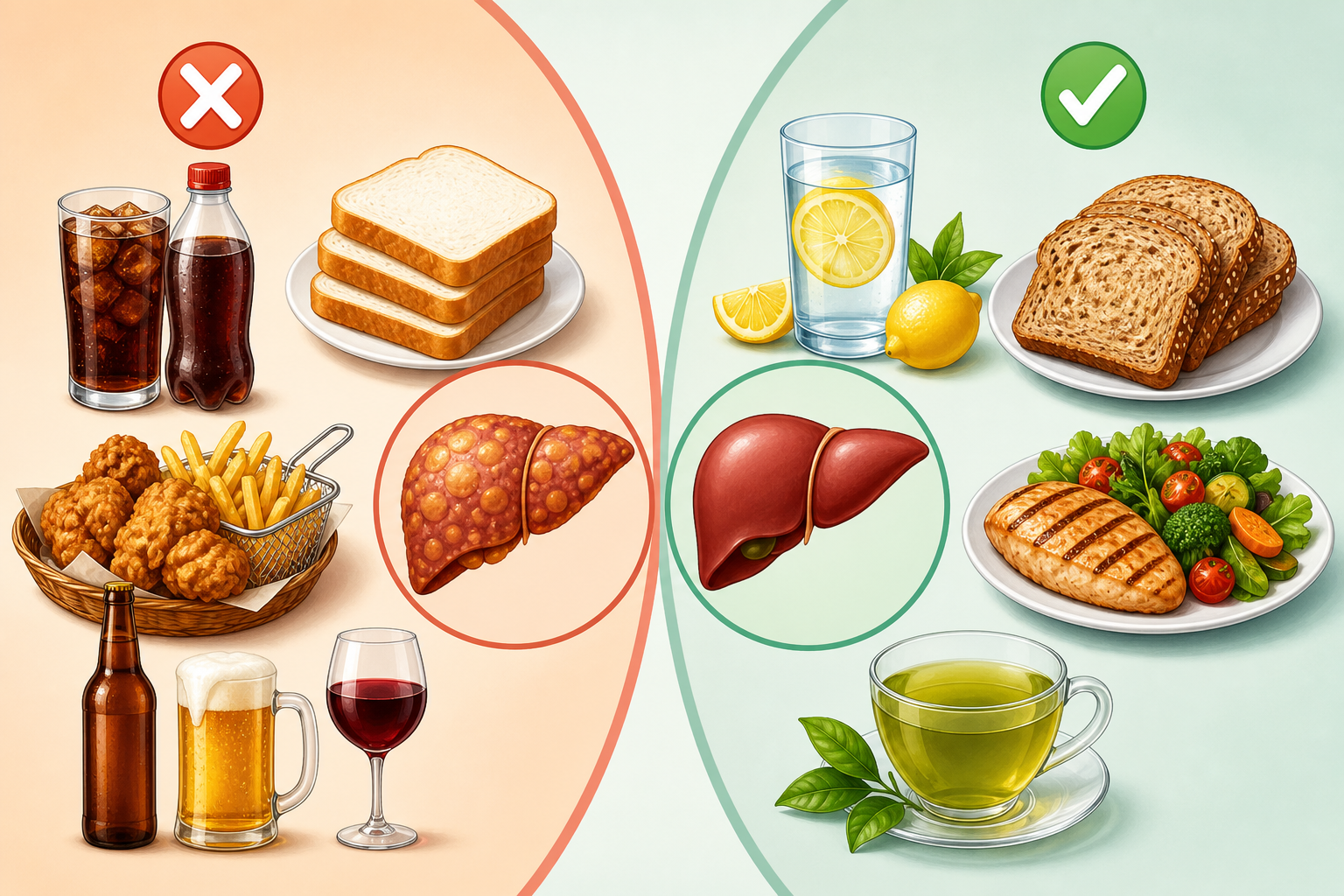
A comparison illustration: on one side, foods to avoid for fatty liver (sugary drinks, white bread, fried foods, alcohol); on the other, healthy alternatives (water with lemon, whole grain bread, grilled foods, green tea).

Real Dietitians, Real Results

Download on the App StoreGet it on Google Play

Building Your Fatty Liver Diet Plan: A Practical Day of Eating

Translating these guidelines into actual meals makes them far easier to follow. Here’s a sample day that incorporates liver-healing foods without feeling restrictive.

Breakfast: Oatmeal made with rolled oats, a tablespoon of ground flaxseed, a handful of blueberries, and a sprinkle of cinnamon. Pair with black coffee or unsweetened green tea.

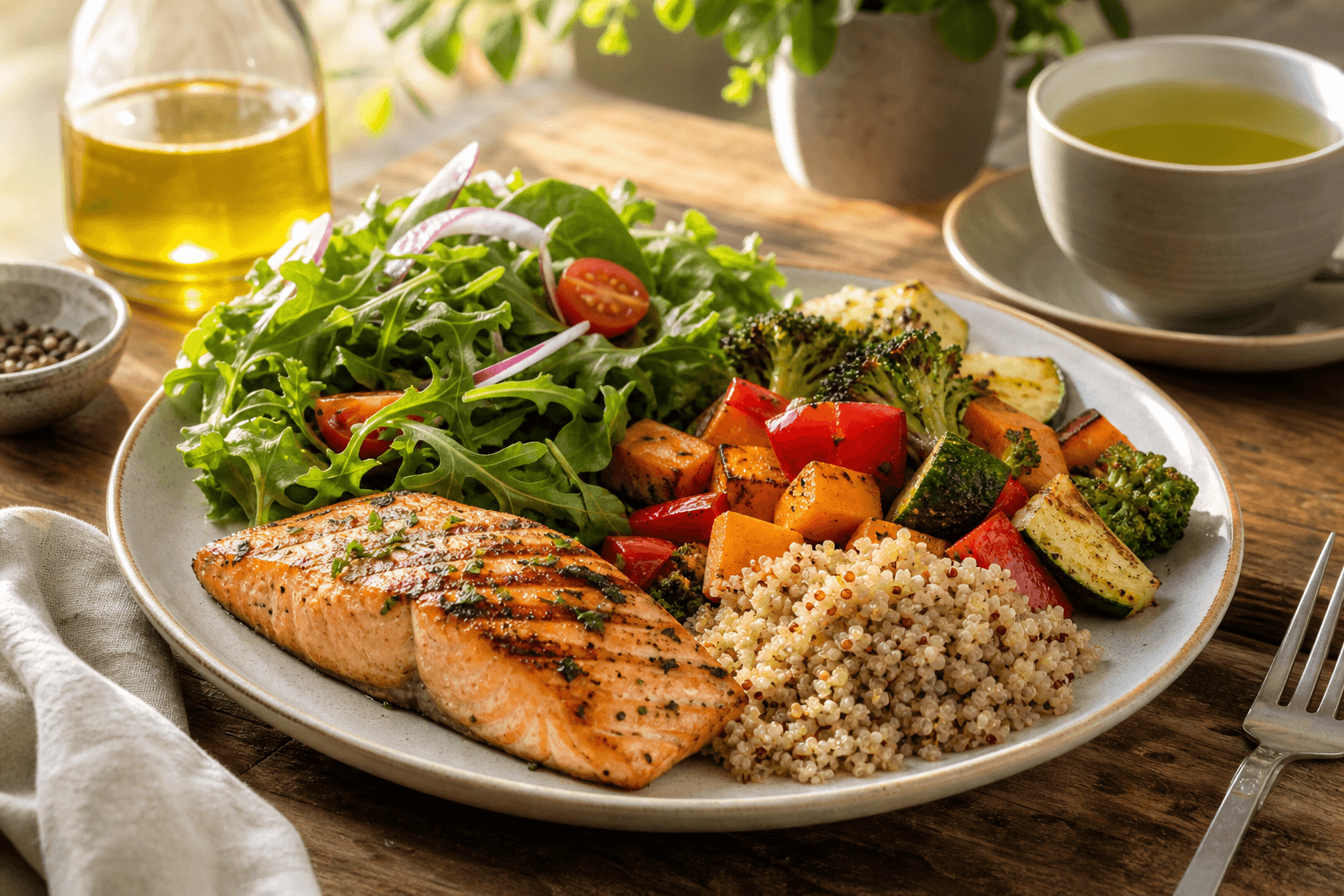
Lunch: A large mixed greens salad topped with grilled salmon, cherry tomatoes, cucumber, red onion, and a dressing of extra virgin olive oil and lemon juice. A slice of whole-grain sourdough on the side.

Real Dietitians, Real Results

Download on the App StoreGet it on Google Play

Snack: A small apple with a tablespoon of walnut butter, or a handful of raw almonds.

Dinner: Quinoa bowl with roasted broccoli, chickpeas, and a garlic-tahini sauce. Sautéed spinach on the side with a drizzle of olive oil.

Dessert (optional): A small bowl of fresh mixed berries with a dollop of plain Greek yoghurt.

Real Dietitians, Real Results

Download on the App StoreGet it on Google Play

Tips for Dining Out and Reading Labels

  • When eating out, look for grilled, baked, or steamed dishes. Ask for sauces and dressings on the side. Choose vegetables or a side salad instead of fries or white rice.
  • Learn to spot hidden sugars on labels: anything ending in “-ose” (sucrose, fructose, maltose) and syrups like corn syrup, rice syrup, and agave. Aim for products with less than 5g of added sugar per serving.
  • Portion sizes matter for weight management. A simple visual guide: fill half your plate with vegetables, a quarter with lean protein, and a quarter with whole grains or starchy vegetables.

Lifestyle Factors Beyond Diet

Diet is central, but a few other habits amplify your results.

  • Gradual weight loss: Losing just 5–10% of your body weight can significantly reduce liver fat and inflammation. Aim for 1–2 pounds per week through sustainable changes rather than crash diets, which can actually worsen liver health.
  • Moderate exercise: Aim for at least 150 minutes of moderate activity per week—brisk walking, swimming, cycling, or dancing. Even two 15-minute walks a day make a difference. Exercise improves insulin sensitivity and helps burn liver fat directly.
  • Manage related conditions: If you have type 2 diabetes, high cholesterol, or high blood pressure, work with your healthcare provider to keep them well-controlled. These conditions and fatty liver often improve together when you adopt a liver-friendly lifestyle.

Supplements and Considerations: Proceed with Caution

You may have heard about vitamin E, milk thistle, or omega-3 supplements for fatty liver. While some studies show mild benefits, supplements are not a substitute for a healthy diet and can be risky without medical supervision. Vitamin E, for example, has been linked to increased risk of prostate cancer in men and bleeding issues. Milk thistle may interact with medications. Always consult your doctor before adding any supplement to your routine.

When to Seek Personalised Help

General advice is a great starting point, but your body, health history, and preferences are unique. If you feel overwhelmed or unsure how to adapt these recommendations to your life, a registered dietitian can create a tailored fatty liver diet plan that fits your tastes, culture, and health goals. They can also help you navigate eating out, emotional eating, and meal prep in a way that feels doable rather than punitive.

Real Dietitians, Real Results

Download on the App StoreGet it on Google Play

That’s where Nutrista comes in. Unlike generic calorie-tracking apps that offer only automated, AI-generated suggestions, Nutrista connects you with a global community of real, registered, and vetted dietitians who use modern technology to deliver deeply personalised care. With the support of an AI assistant like Nutrista AI, these dietitians can efficiently analyse your needs and craft a liver-friendly meal plan that evolves with you. It’s the warmth of human expertise combined with the convenience of cutting-edge tools.

Remember, small consistent changes lead to lasting results. Your liver is remarkably resilient, and every meal is an opportunity to nourish it. For a plan that’s uniquely yours, consider reaching out to a qualified dietitian through Nutrista and take the guesswork out of healing. Always consult your healthcare professional before making significant changes to your diet or lifestyle.

Real Dietitians, Real Results

Download on the App StoreGet it on Google Play
#fatty liver diet#NAFLD nutrition#liver health foods

Others Viewed