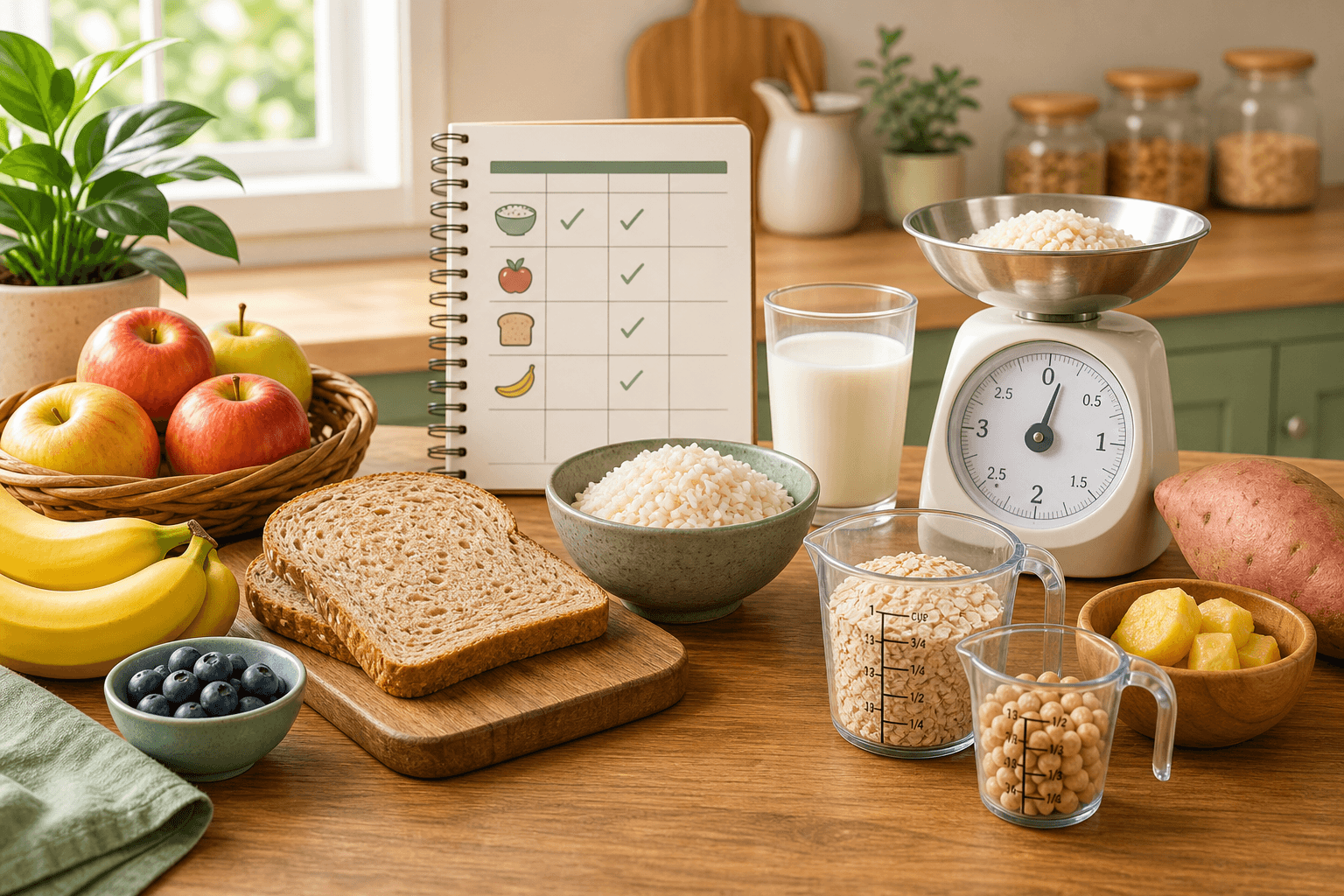
carb counting

Carb Counting for Diabetics: A Beginner's Guide to Managing Blood Sugar

Nutrista Team
Share
Carb Counting for Diabetics: A Beginner's Guide to Managing Blood Sugar

What Is Carb Counting and Why Does It Matter for Blood Sugar?

If you have been recently diagnosed with type 2 diabetes, you have probably heard the term "carb counting" more times than you can count. Maybe it feels overwhelming, or maybe you are wondering if you can ever enjoy a slice of bread again without guilt. Take a deep breath. Carb counting is not about deprivation; it is about empowerment. It is a skill that helps you understand how different foods affect your blood sugar, so you can make confident choices that support your health.

Carbohydrates are one of the three main nutrients in food, along with protein and fat. When you eat carbs, your body breaks them down into glucose (sugar), which enters your bloodstream. For someone with diabetes, the body struggles to manage this glucose effectively, either because of insulin resistance or insufficient insulin production. Not all carbs affect your blood sugar the same way. That is where carb counting comes in: it gives you a clear picture of how much carbohydrate you are eating and helps you match it to your body's needs, medication, and activity level.

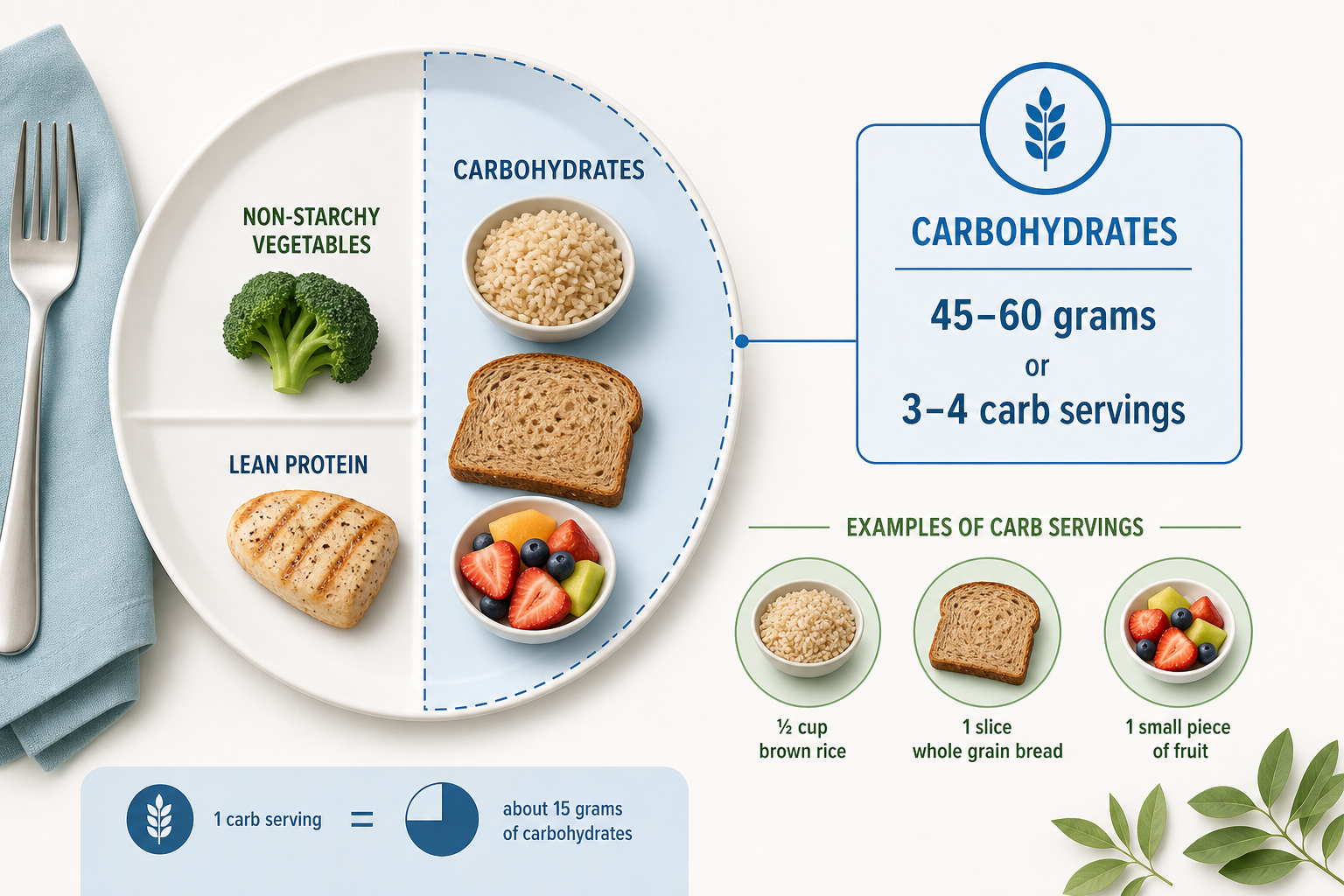
A dinner plate divided into sections showing carb servings and examples of brown rice, bread, and fruit

Real Dietitians, Real Results

Download on the App StoreGet it on Google Play

Simple vs. Complex Carbohydrates: What You Need to Know

Before you start counting, it helps to know that carbohydrates fall into two main categories: simple and complex.

Simple carbohydrates are made of one or two sugar molecules. They break down quickly and can cause a rapid spike in blood sugar. You will find them in foods like table sugar, honey, fruit juice, regular soda, candy, and many packaged snacks. That does not mean you can never have them, but they need to be eaten in small portions and often paired with protein or fat to slow down digestion.

Complex carbohydrates are made of longer chains of sugar molecules and usually come with fiber, vitamins, and minerals. Because they take longer to digest, they raise blood sugar more slowly and steadily. Think whole grains, beans, lentils, starchy vegetables (like sweet potatoes and corn), and whole fruits. Choosing mostly complex carbs is one of the most powerful steps you can take for stable blood sugar.

Real Dietitians, Real Results

Download on the App StoreGet it on Google Play

The fiber in complex carbs is a game changer. Fiber slows how quickly your body absorbs glucose, so even if two foods have the same total carb count, the one with more fiber will likely have a gentler impact on your blood sugar. When you count carbs, you are keeping an eye on total carbohydrates, but the quality of those carbs matters just as much.

What Is a Carb Serving? Breaking Down the 15-Gram Rule

In many carb-counting approaches, one "carb serving" or "carb choice" equals approximately 15 grams of total carbohydrate. This simplification makes it easier to plan meals without a calculator at every step. Here is what one carb serving looks like in everyday foods:

  • 1 slice of bread (whole grain or white)
  • 1/3 cup cooked rice or pasta
  • 1 small piece of fresh fruit (like an apple the size of a tennis ball)
  • 1/2 cup cooked oatmeal
  • 1/2 cup beans or lentils (also provide protein)
  • 3 cups popcorn (air-popped, no added sugar)
  • 1/2 cup mashed potatoes or corn
  • 1 small (6-inch) tortilla

Keep in mind that starchy vegetables and legumes count as carbs, while non-starchy veggies (like leafy greens, broccoli, cucumbers) contain very little digestible carbohydrate and you do not usually need to count them unless you eat huge amounts.

Real Dietitians, Real Results

Download on the App StoreGet it on Google Play

Using this "serving" concept, a meal with 3 carb servings would contain about 45 grams of carbohydrate. Many people with type 2 diabetes aim for meals in the 45–60 gram range, but this is highly individual. Your healthcare team can help you find the right target.

Different Ways to Count Carbs: Find Your Comfort Zone

Not everyone needs to count carbs down to the exact gram. Carb counting can be adapted to your lifestyle, medication, and comfort level. Here are the three main levels:

Basic carb counting (awareness level): You simply identify which foods contain carbs and aim for a consistent amount at each meal. This might mean having a fist-sized portion of rice, one slice of bread, or one small piece of fruit at lunch and dinner. This approach is perfect if you are not taking insulin and want to build general awareness without detailed tracking.

Real Dietitians, Real Results

Download on the App StoreGet it on Google Play

Moderate carb counting (servings per meal): You keep the number of carb servings consistent from day to day. For example, you decide to have 3 carb servings (45 grams) at lunch each day. This consistency helps your blood sugar stay predictable—especially if you take medications that stimulate insulin production.

Advanced carb counting (exact grams for insulin dosing): If you take mealtime insulin, this method helps you match insulin doses to the exact grams of carbohydrate you plan to eat. It requires more precision, often using an insulin-to-carb ratio provided by your diabetes educator or dietitian. Many people using this level benefit from digital tracking tools, but they should always be guided by a professional.

Wherever you are starting, remember any step toward awareness is progress. You do not need to jump to advanced counting on day one.

Real Dietitians, Real Results

Download on the App StoreGet it on Google Play

How to Read Nutrition Labels for Carb Counting

Food labels are your carb-counting best friend. Here is a simple step-by-step:

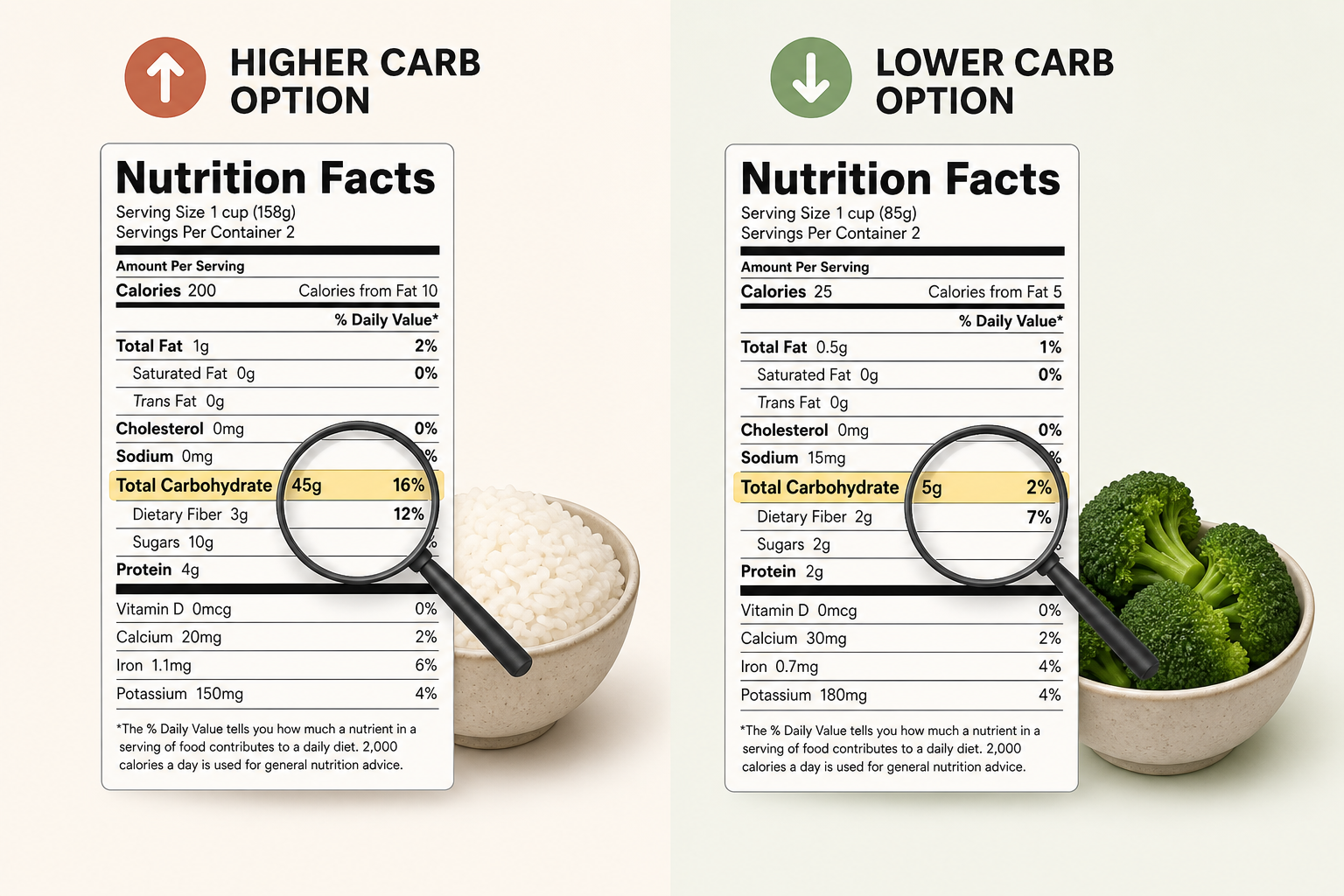
  1. Look at the serving size first. All the numbers on the label are for one serving. If you eat twice the serving, you double the carbs.
  2. Find “Total Carbohydrate.” This number includes sugar, starch, and fiber. For carb counting, you generally work with total carbohydrates, not just sugars.
  3. Note the dietary fiber. While fiber is part of total carbs, it does not raise blood sugar. If a food has 5 grams or more of fiber per serving, some people subtract half the fiber grams from the total carbs (this is called "net carbs"), but it is safest to ask your dietitian what method works for you.
  4. Check for hidden carbs. Sugar alcohols (in sugar-free candies) may appear under “Total Carbohydrate,” but they affect blood sugar differently. Many people subtract only half the grams of sugar alcohol, but again, individual guidance matters.

A side-by-side comparison of nutrition labels highlighting total carbohydrates

When comparing products, the lower-carb option is not always the healthier one. A whole grain bread might have more carbs than a processed white bread but come with far more fiber and nutrients that support overall health. Always weigh the whole picture.

Real Dietitians, Real Results

Download on the App StoreGet it on Google Play

Practical Tips for Eating Out and Social Gatherings

Restaurant meals and parties can feel like a carb-counting minefield, but a few strategies can help you stay on track without stress:

  • Estimate portions visually: 1 cup of cooked rice or pasta is about the size of a fist. A 1-ounce bread roll is roughly the size of a tennis ball. A small baked potato fits in your cupped hand.
  • Ask for sauces and dressings on the side. Sweet glazes and creamy sauces often hide extra sugar and carbs.
  • Choose grilled or baked proteins and double up on non-starchy vegetable sides instead of fries or mashed potatoes.
  • When in doubt, eat half now. Restaurant servings are typically double or triple what you need. Box up half for later, and you instantly cut the carb load.
  • Balance your plate: Aim for 1/4 of the plate to be protein, 1/4 to be carb-rich food, and 1/2 to be non-starchy vegetables. This visual guide can replace counting if you are in a pinch.
  • Be mindful of beverages. A large soda or sweetened iced tea can contain 50–60 grams of carb—that is 3–4 carb choices in one drink. Stick with water, unsweetened tea, or sparkling water with a squeeze of lemon.

Common Questions About Carb Counting

How many carbs should a diabetic eat per meal? There is no one-size-fits-all answer. A common starting point for many people with type 2 diabetes is 45–60 grams of total carbohydrate per meal, and 15–30 grams per snack. However, your needs depend on your age, weight, activity level, medications, and blood sugar goals. A registered dietitian can help you find your sweet spot.

Is carb counting the same as calorie counting? No. Carb counting focuses specifically on the grams of carbohydrate in the foods you eat, while calorie counting tracks all energy from carbs, protein, and fat. You can count carbs without counting calories, but some people find it helpful to do both for weight management. They are separate tools with different purposes.

Real Dietitians, Real Results

Download on the App StoreGet it on Google Play

Can I still eat carbs if I have diabetes? Absolutely. Carbohydrates are your body's main fuel source, and you need them for energy. The goal is not to eliminate carbs but to choose quality sources, spread them throughout the day, and match the amount to what your body can handle. With careful carb counting, you can still enjoy bread, rice, fruit, and even an occasional treat.

Sample Meal Ideas: Distributing Carbs Throughout the Day

Spacing your carb intake evenly helps prevent large blood sugar swings. Here is a one-day example that provides about 45 grams of carb per meal and 15–20 grams per snack:

Breakfast (45g carb total)

  • 1/2 cup cooked oatmeal (15g)
  • 1 small sliced banana (15g)
  • 1 cup unsweetened almond milk (2g)
  • 1 hard-boiled egg (0g)

Morning Snack (15g carb)

  • 1 small apple (15g)
  • 1 string cheese (1g)

Lunch (45g carb total)

  • Turkey and avocado sandwich: 2 slices whole grain bread (30g), 3 ounces turkey, 1/4 avocado (3g), lettuce, tomato
  • Carrot sticks and 2 tablespoons hummus (5g)
  • Water with lemon

Afternoon Snack (15g carb)

  • 3 cups air-popped popcorn (15g)

Dinner (45g carb total)

  • 4 ounces grilled salmon (0g)
  • 2/3 cup cooked quinoa (30g)
  • 1 cup steamed broccoli and cauliflower (5g)
  • 1 tablespoon olive oil (0g) and lemon juice

Evening Snack (if needed, 15g carb)

  • 1/2 cup plain Greek yogurt (5g) with 1/2 cup blueberries (10g)

This is just one example. Your meals can be adjusted to fit your cultural preferences, cooking style, and health needs.


Real Dietitians, Real Results

Download on the App StoreGet it on Google Play

When to Seek Help from a Dietitian

While this guide gives you a solid foundation, carb counting reaches a new level of precision and personalization when you work with a registered dietitian. A dietitian can:

  • Calculate your individual carbohydrate needs based on your health history and medications.
  • Teach you how to adjust carbs for exercise, illness, or medication changes.
  • Help you create a meal plan that fits your life, not one that feels like a punishment.
  • Show you how to count carbs in mixed dishes, ethnic foods, and hidden sources.

Diabetes management is not a solo sport. Everyone’s body responds differently, and a professional can turn frustrating guesswork into a clear, flexible plan.

Small Steps, Meaningful Progress

Learning to count carbs is like learning a new language. At first, you may need a dictionary and a lot of patience. Over time, you will start to recognize patterns, estimate portions by eye, and make choices that leave you feeling energized rather than drained. Celebrate the small victories—like the first time you read a nutrition label and instantly knew how many carb servings were in that granola bar, or when you ordered a meal at a restaurant that kept your blood sugar steady all afternoon.

Real Dietitians, Real Results

Download on the App StoreGet it on Google Play

Please remember that this article is for educational purposes and does not replace the personalized advice of a healthcare professional. Always consult your doctor or a registered dietitian before making significant changes to your diet or medication routine.

At Nutrista, we believe that the best diabetes nutrition support comes from real human expertise, made smarter with technology. Unlike generic calorie-tracking apps that rely solely on automated algorithms or anonymous coaches, Nutrista is the first platform that connects you with a large community of international, registered, vetted dietitians who are supported by artificial intelligence. These dietitians use cutting-edge tools to provide personalized meal plans, carb-counting guidance, and ongoing support that adapts as your needs change. And they do it with the warmth and understanding that only a human can offer. If you are ready to take the next step in your carb-counting journey, consider connecting with a Nutrista dietitian who specializes in diabetes nutrition. Small steps, taken with the right support, lead to meaningful, lasting progress.

Real Dietitians, Real Results

Download on the App StoreGet it on Google Play
#carb counting#type 2 diabetes#blood sugar management

Others Viewed